Ancient Civilization
Fingerprints of the Gods: The Book That Started the Conversation
By Darrell Wallen
Would you prefer to listen?
Today I want to talk about one book. Not a theory, not a television show, not a debate clip. One book. Graham Hancock's Fingerprints of the Gods, published in 1995.
If you have ever wondered how we got from a few shelves of fringe paperbacks to a world where millions of people argue about lost civilizations, this is the place to start. I'll tell you what the book actually says, what happened when it landed, and what has held up in the thirty years since. I'll also tell you where it fell short, because the best way to respect an idea is to test it. Where something is a claim, I'll say so. Where a critic makes a point, I'll name them. And where I couldn't verify something, I'll say that too.
§ 1A big book arrives
Let's start with how it landed. Fingerprints came out in Britain in the spring of 1995 and in the United States from Crown around early summer. The American hardback ran 578 pages and cost twenty-seven dollars and fifty cents, according to the Washington Post review that July.
By the end of July, The Independent reported that it had sold about sixty thousand copies in the UK, at nearly seventeen pounds a copy, and had sat in the British hardback top ten since April. That one is a hard figure from 1995.
What about the famous numbers you hear today? Hancock's own website gives more than three million in one place and more than five million in another. Other pages that repeat five million appear to cite that same site, so they add nothing independent. Joe Rogan once said on air that it sold five million copies or something crazy, which was an offhand remark. So the honest answer is that it was a major bestseller, and I can't give you a verified lifetime figure.
The reviews at the time were split down the middle. Kirkus called it a fancy piece of historical sleuthing, breathless but intriguing and entertaining. The Times called it inspiring. Literary Review said it was one of the intellectual landmarks of the decade. And then there was the other camp, which we'll get to.
§ 2The thesis in plain English
Here is the argument, as the book makes it. Hancock says that the story we tell about the rise of civilization has a hole in it. He suggests that a sophisticated culture, one we have forgotten, existed during the last Ice Age, and that it was wiped out by a global catastrophe around twelve thousand years ago. Survivors, he proposes, travelled the world and passed on fragments of their knowledge to hunter-gatherers, who then built the great monuments and myths we see in Egypt, Peru, Mexico and beyond.
He calls himself a compiler of evidence, not a scientist, and says he is arguing for a paradigm shift. In a 1995 interview with the Seattle Times he said the past should not be a monopoly of a small group of scholars. A lot of people responded to that.
The book runs to fifty-two chapters in eight parts. It starts with old maps, moves through the Andes and Central America, spends a long stretch on myth and astronomy, and then goes to Egypt for the big finish.
One thing that surprises people: the mechanism of the catastrophe in this book is not a comet. A search of the book's text finds no mention of the Younger Dryas, no mention of Göbekli Tepe, and the word comet only appears as part of another word. The engine in 1995 is something called earth crust displacement. We'll get to that in a moment.
§ 3The maps and the sliding crust
The book opens with maps. Specifically, the Piri Reis map, drawn in 1513 by an Ottoman admiral, and a handful of later European maps. Hancock builds on the work of Charles Hapgood, an American history professor who argued in the 1960s that these maps preserve older knowledge. The official Fingerprints page tells the story of a 1960 letter from an Air Force officer who said the southern coast on the map seemed to show Queen Maud Land in Antarctica without ice.
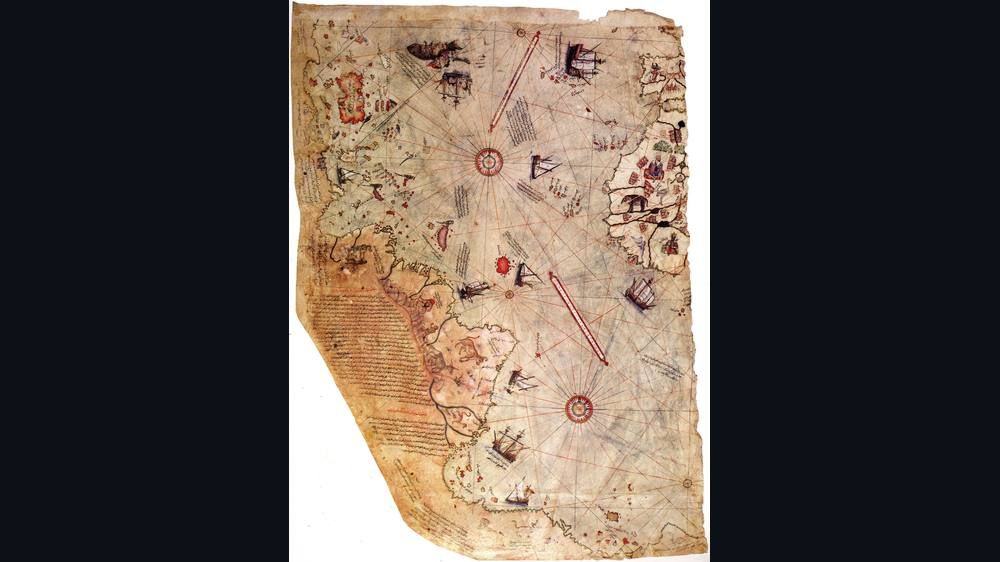

Hancock's reading is this: an unknown seafaring people mapped Antarctica before it was frozen, and the Piri Reis map preserves a copy.
Now the pushback. Mainstream historians of cartography read the southern landmass on the Piri Reis map as the coast of South America bending eastward, which is how many mapmakers of that period drew a hypothetical southern continent. Gregory McIntosh's book-length study, The Piri Reis Map of 1513, published by the University of Georgia Press, refutes the popular reading of Reis's Antarctica as evidence of ancient civilizations or visitors, and argues that the map draws instead on Columbus's Second Voyage of 1493 to 1496, and a study I list in the sources has the main Antarctic ice sheet forming about thirty-four million years ago, with the ice confined to East Antarctica at first. And the ice itself speaks. The EPICA ice core from Dome C in Antarctica holds about eight hundred thousand years of continuous layered ice. That does not leave room for an ice-free continent twelve thousand years ago.
That brings us to Hapgood's other idea, earth crust displacement. In the book's telling, the entire outer shell of the Earth slid over the interior, dragging Antarctica from about two thousand miles further north to the pole, around the eleventh millennium BC. Hapgood published this in 1958 in Earth's Shifting Crust. Geologists and geophysicists rejected it then and they reject it now, in favour of plate tectonics, which has been confirmed by sea-floor mapping, satellites and magnetic data.
The sceptic Mikey Brass, writing in Skeptical Inquirer in 2002, noted that Hancock claimed in 1995 that no geologist has succeeded in proving it incorrect. That's a statement about absence of proof, not evidence. Brass argued the idea collides with plate tectonics and with climate records from pollen and ice.
Hapgood was asking a real question about how the poles behave. But the specific mechanism the book needs does not exist in the geology we have.
§ 4The Andes and the Maya
From the maps, the book takes us to the Andes. It spends a lot of time at Tiahuanaco, near Lake Titicaca in Bolivia, relying heavily on an older astronomical dating by Arthur Posnansky. The Egyptologist Jaromir Malek, reviewing the book in 1996, noted that Hancock re-dated Tiahuanaco from about 500 AD to as early as fifteen thousand to ten thousand BC.
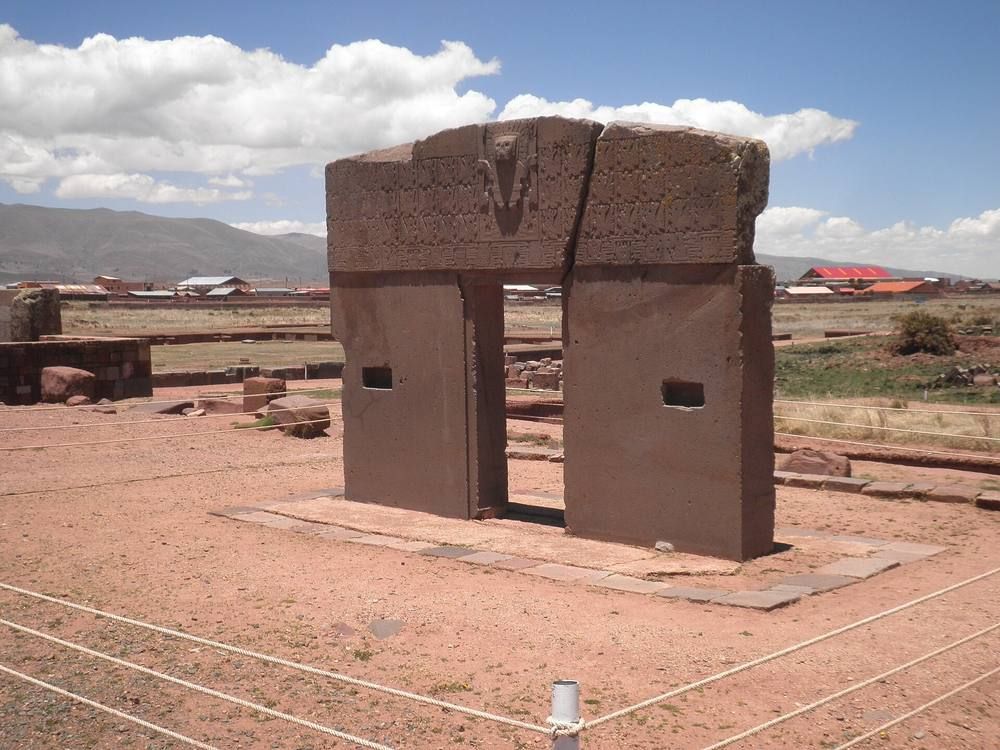

Adam Goodheart, in the Washington Post, was blunter. He wrote that archaeologists using radiocarbon dating place the site's classic phase at around 500 AD, not 10,000 BC. He said Hancock relied on a long-since-discredited older book and ignored the study done since the 1970s. UNESCO's World Heritage entry says Tiwanaku, the capital of a powerful pre-Hispanic empire, reached its apogee between 500 and 900 AD.
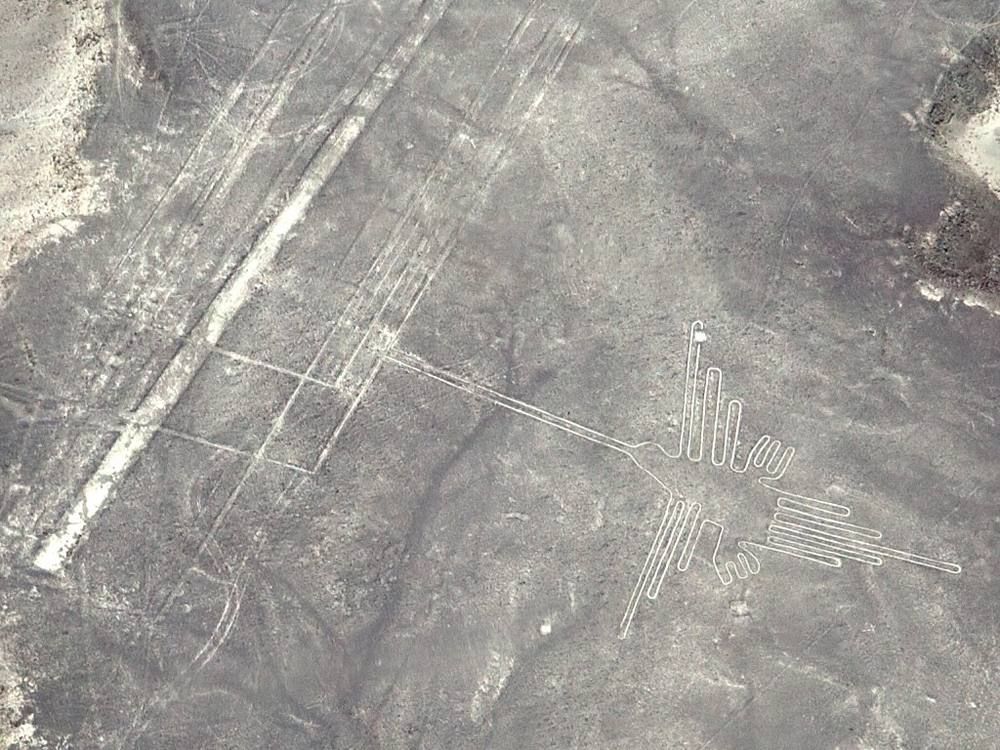
Then there's Nazca. People often say Hancock thinks the lines were landing strips for aliens. The book says the opposite. The digitised text gives expert dates of 350 BC to 600 AD, calls the lines inherently undatable, rejects the spacemen idea, and quotes the researcher Maria Reiche as saying the spacemen would have gotten stuck. Hancock's point is that no one knows what the lines were for. That is fairer than the usual retelling, and he deserves credit for it.

In Central America, the book goes to the Olmec and the Maya, and ties Viracocha in Peru to Quetzalcoatl in Mexico as two versions of a bearded civilizing teacher. Then it gets to the date that made headlines. The Maya Long Count calendar completes a great cycle on 23 December 2012. The book presents that as an end-of-the-world date, and in the concluding chapter it says we may already be living in the last days. The Washington Post and the Seattle Times both flagged it. Hancock, in The Independent, hedged, saying he was not claiming the end of the world was nigh.
What happened? The date came and went. The epigrapher Mark Van Stone, in a 2011 paper titled It's Not the End of the World, found no Maya evidence that the 2012 date was prophesied as an end, and the NASA scientist Don Yeomans wrote on JPL's blog that the date was the end of a Maya long-count period, just as a calendar on the kitchen wall begins again in January. It was the end of a count of days, and a reason to celebrate. The director Roland Emmerich said, in a Time Out London interview quoted on Fingerprints' publisher page, that he first read about the Earth's crust displacement theory in Fingerprints of the Gods and that it gave him the hook for his 2009 film 2012. That date is one of the clearest claims that did not survive.
§ 5Giza, Orion and the Sphinx
Now the heart of the book: Egypt. Hancock builds on Robert Bauval's idea that the three big pyramids at Giza mirror the three stars of Orion's belt, as they appeared in 10,450 BC. He also leans on the Sphinx. John Anthony West and the geologist Robert Schoch argued that its weathering looks like rain damage from a wetter era. The book argues the Sphinx marks the Age of Leo, which it dates to between 10,970 and 8810 BC.
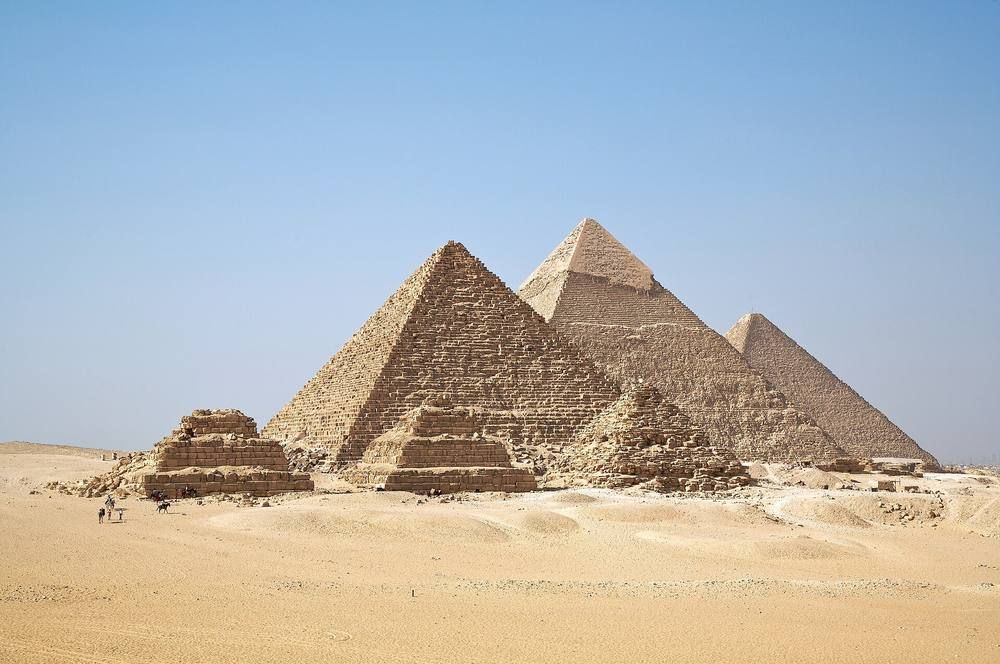

Two astronomers, Ed Krupp at Griffith Observatory and Tony Fairall at the University of Cape Town, tested the Orion idea with planetarium software. They found the angle between the belt and north in that era was around forty-seven to fifty degrees, against thirty-eight for the pyramids. They noted that to make the pattern fit, one of the two images has to be turned upside down. And they pointed out that the equinox in 10,500 BC was in Virgo, not Leo.
On the Sphinx, most Egyptologists attribute it to the pharaoh Khafre. Mark Lehner's Ancient Egypt Research Associates summarise the evidence that the Sphinx Temple blocks came from the same quarry as the Sphinx, which the Swiss architect Herbert Ricke concluded in his 1967 to 1970 study, tying the Sphinx, its temple and Khafre's Valley Temple into one building project. Geologists in the debate argue that Nile floods and occasional heavy rains explain the erosion.
And then there's the hardest problem. The book itself says the shafts of the Great Pyramid line up with stars as they appeared around 2450 BC, which is right where mainstream Egyptology puts the pyramids. To bridge the gap between 10,450 BC and 2450 BC, the book leans on a long-lived priesthood that kept the knowledge going, and no archaeological trail for that priesthood has been found.
There's a second problem. Hancock argues that Egyptian civilization burst upon the scene fully formed. Malek and Goodheart both said that mischaracterises the field. Goodheart wrote that scholars have traced the origins of the Egyptian state back to at least 4,000 BC.
What I'd credit Hancock for is that he proposed tests. He called for chlorine-36 dating at Giza, for opening the small door in the Queen's Chamber shaft, for following up a 1993 seismic survey that found a cavity under the Sphinx's paws, and for studying the land beneath the Antarctic ice. That is an invitation to science. It is also worth saying that in the same closing chapter he writes, in his own words, that he goes on intuition again, not on evidence.
§ 6Precession and the great mill
The long middle of the book is about myth and astronomy. Hancock draws on Hamlet's Mill, a 1969 book by Giorgio de Santillana and Hertha von Dechend, to argue that myths around the world encode the precession of the equinoxes. That's the slow wobble of Earth's axis that shifts the stars' positions over roughly twenty-six thousand years. In the book's telling, the numbers that appear again and again, such as 108, 540, 2,160 and 432,000, are a code.
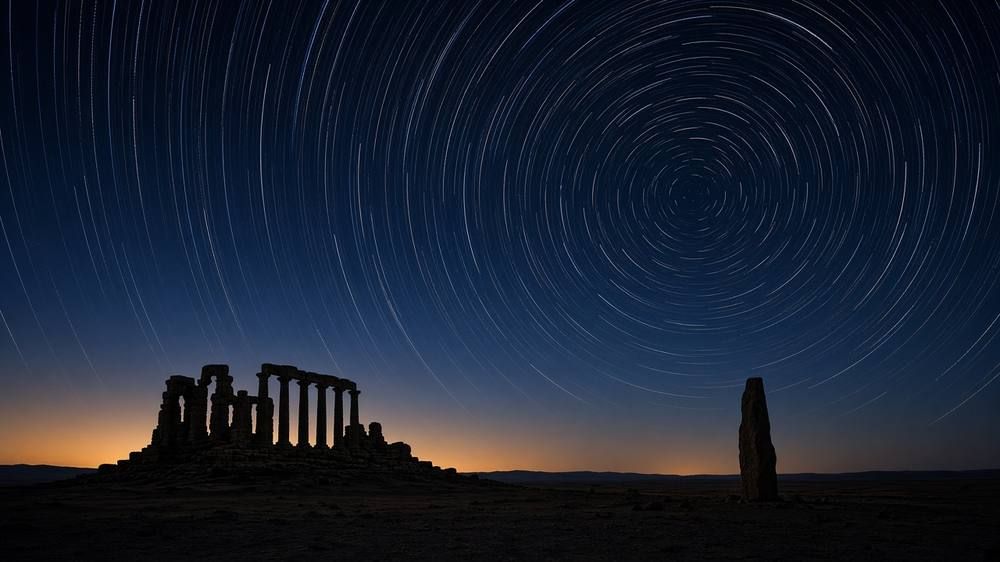
Precession itself is real, credited to Hipparchus in the second century BC, and astronomers can compute where any star was in any age. That is why this idea can be tested.
The dispute is about whether anyone encoded it. A 2025 paper in the Journal for the History of Astronomy examined the long numbers in Maya inscriptions and found the arguments that they encode precession to be invalid and the claims implausible, and argued that the daykeepers' attention was on the solstices rather than the equinoxes. And numbers like 108 or 432,000 can arise from calendars and base-sixty arithmetic. That's my own general caution, not a named critic's point.
Angkor Wat gets a brief appearance in this book. Hancock describes the causeway with its rows of statues, five gates, 108 figures per avenue, and 540 in all, and reads it as a churning of the Milky Ocean that expresses precession. The book is not full of Angkor, as people often assume. The bigger argument about the temples comes later, and the first episode of his 1998 series is titled Heaven's Mirror.
§ 7The critics, by name
At the British Museum, the Keeper of Antiquities, Vivian Davies, told The Independent in 1995, another one of those. He admitted he hadn't read it. Hancock compared the academic response to the Spanish Inquisition. That exchange sums up the first decade: a book with a mass audience on one side and scholars who mostly would not engage on the other.
Goodheart called it archaeology mixed with global paranoia. But notice what he also wrote: that some of the questions Hancock raises, such as how the pyramids were built or how the Maya learned so much about astronomy, are legitimate historical puzzles. Both halves of that are true.
Then, in 1999, the BBC's Horizon made a documentary called Atlantis Reborn, testing the ideas of Hancock and Bauval. Both men complained to the Broadcasting Standards Commission. In November 2000 the Commission found that the programme makers acted in good faith, and upheld one point of unfairness. The BBC noted that this was not support for the theories, and that the Commission made no judgement on the evidence.
Later critics include Garrett Fagan, who edited the book Archaeological Fantasies, Kenneth Feder, who has written widely about this genre, and more recently the archaeologist Flint Dibble, who I'll come to shortly.
§ 8How the story changed
Here's a point that gets lost. Hancock's explanation has moved over the years. In 1995, the mechanism was crustal displacement. In 2002 he published Underworld, which put more weight on the flooding of coastlines at the end of the Ice Age. And in 2015 came Magicians of the Gods, which Hancock's own site calls the sequel to Fingerprints and which adopts the Younger Dryas impact hypothesis: the idea that fragments of a comet struck the Earth about twelve thousand eight hundred years ago.
That hypothesis is still contested. A large 2023 paper by Holliday and colleagues presents itself as a refutation. Reviews of Magicians were harsh; Kirkus called it risible and sure to sell. The writer Jason Colavito and Marc Defant criticised factual errors.
Then there's Göbekli Tepe in Turkey. That site, which dates from about 9500 BCE, with only about ten percent excavated as of 2021, has become central to the later story. But it was built by hunter-gatherers, and it is not in the 1995 book.
None of this makes the 1995 argument wrong or right by itself. But the explanation is a moving target, and a moving target is hard to test.
§ 9The Rogan effect
In 2011, Joe Rogan hosted Hancock for the first time, on episode 142, with Duncan Trussell. Rogan said that Hancock was probably the one guy who has influenced his view of history more than anyone, and he called Fingerprints one of his all-time favourite books. Hancock has appeared thirteen times in all, including episode 2136 in April 2024, where he debated the archaeologist Flint Dibble.
And the book keeps coming up. Per aggregator sites, Rogan returned to it in episodes 551, 872 and 1284, among others, and other guests have brought it up in recent years. I'd treat those as pointers, not gospel, since I haven't checked them against the audio.
There's a counterpoint, too. In May 2025, Rogan hosted the Egyptologist Zahi Hawass, who said he had argued against Hancock, Bauval and West for twenty-five years. Whatever you think of Hawass, the episode shows how far this conversation has travelled. In 1995, scholars didn't want to read the book. By 2025, they were being invited onto Rogan's show to answer it.
Among older recordings, the earliest I could confirm is Hancock's first appearance on Art Bell's Coast to Coast show on 18 June 1996, which runs about two hours. A summary of it says he talked about Giza, the Sphinx, and what he described as secret access to chambers there. I haven't listened to the audio myself, so I'm relying on the archive's description. And a small correction, since I've seen it repeated: Quest for the Lost Civilization, the Channel 4 series, aired in 1998, not 1996.
§ 10What held up, what didn't
Let's put it together.
What held up, in a limited sense? The late Ice Age really did have sea levels more than a hundred metres lower than today's, so coastlines that people lived on are now under water. That's well established. Monumental building by hunter-gatherers was real, and Göbekli Tepe showed it, though it did not need a lost civilization to explain it. And Hancock's call for dating methods and surveys was fair.
Here is what did not. Crustal displacement did not survive geophysics. The idea that the Piri Reis map shows an ice-free Antarctica is not accepted by map historians, and ice cores rule out the timeline. Tiahuanaco was not built in 15,000 BC. The Orion match is read by astronomers as loose. The Sphinx's date has not been moved by the weathering argument. And the 2012 date passed without incident.
And here is what remains unproven: that an advanced culture existed before about twelve thousand years ago. No tools, no settlements, no burials, no workshops have been found. Absence of evidence isn't proof of absence, but it also isn't evidence. That is where the real argument sits.
§ 11The book set the stage
I'll end with what I think is the most important thing. Whatever you make of the thesis, the book got a mass audience asking questions that scholars then had to answer in public. How old are these monuments? What lies on the drowned continental shelves? What do surveys, excavations and cores say? Since 1995 we've had geophysical survey at Göbekli Tepe, ice-core records going back eight hundred thousand years, and continued excavation at sites like Giza. Some of that research was prompted by the argument and some happened regardless. But public interest in it is larger because of this book.
My advice is simple. Read the book itself, rather than someone else's summary, including mine. Then read the critics, too.
§ 12How to find the book
The best place to start is Graham Hancock's official website, grahamhancock.com. It has a page for Fingerprints of the Gods, with the table of contents and a sample chapter. That is the first place I'd check for what's current.
For the book itself, it has been published in several editions, including Crown in the US, Heinemann in the UK, and an updated edition from Century in 2001. Availability and prices change, so check what's in stock and which edition you're getting. Major booksellers, online and local, are the usual route. If you'd rather borrow it, the Open Library lists a borrowable edition and links to WorldCat so you can find a copy at a library near you. And there is an Audible audiobook, narrated by Hancock himself.
So go check out grahamhancock.com, read it for yourself, and come back and tell me what you think. This is The Ancient Sky. Thanks for listening.
Watch & Listen
Hear this entry read aloud. Coming soon — the channels are not live yet.
Sources
Every link below was retrieved while researching this story. Items marked (listing) were found in a search or listing but not opened or played in full; items marked (citation only) gave only bibliographic details.
Articles and reviews
- Kirkus Reviews, 1995 review
- Adam Goodheart, "The Gods Must Be Crazy", Washington Post, 15 July 1995
- Andy Beckett, "The writer who found supermen in Antarctica", The Independent, 30 July 1995
- Ivan Weiss, "Ancient Warnings", The Seattle Times, 29 August 1995
- L. Sprague de Camp, "Fantastic archaeology", Nature 376, 6 July 1995 (citation only)
- Jaromir Malek, review, Discussions in Egyptology 34 (1996), reposted at Hall of Maat
- Mikey Brass, "Tracing Graham Hancock's Shifting Cataclysm", Skeptical Inquirer 26(4), 2002, reposted at Hall of Maat
- BBC Horizon, "Atlantis Reborn" and the Broadcasting Standards Commission outcome: bbc.co.uk/science/horizon/2000/atlantisreborn_bsc.shtml (and bbc.co.uk/science/horizon/2000/atlantisrebornagain.shtml, listing)
- New Scientist, profile of Flint Dibble
- ZME Science on Hancock and the Rogan debate
- The National on Zahi Hawass and the Rogan episode
- New York Post on Zahi Hawass and Rogan
- USGS fact sheet on sea level
- British Antarctic Survey, EPICA Dome C ice core
- EPICA community members, Nature (ice core record)
- Bad Archaeology on Hancock's Antarctica (skeptic site, seen as a search excerpt)
- Younger Dryas impact hypothesis blog post (secondary)
- Carlotto, SSRN abstract (search snippet only, unverified)
- Gregory C. McIntosh, The Piri Reis Map of 1513, University of Georgia Press
- Imperial College London news, where and when the Antarctic ice sheet first formed (permanent glaciation about 34 million years ago, East Antarctica first)
- UNESCO World Heritage Centre, Tiwanaku: Spiritual and Political Centre of the Tiwanaku Culture
- Mark Van Stone, "It's not the End of the World: emic evidence for local diversity in the Maya Long Count", IAU Symposium 278 (2011)
- NASA Jet Propulsion Laboratory, "2012: A Scientific Reality Check" (2009)
- Penguin Random House, Fingerprints of the Gods page (quotes Roland Emmerich from Time Out London)
- Ancient Egypt Research Associates, "Khafre's Monuments as a Unit"
- "Maya astronomy and the precession of the equinoxes", Journal for the History of Astronomy (2025)
- Graham Hancock's official site, Magicians of the Gods page
- Grokipedia, Fingerprints of the Gods (cross-check only; it contains errors, see the notes)
- Also see (aggregators, not a basis for any claim): Wikipedia: en.wikipedia.org/wiki/Fingerprints_of_the_Gods, with Grokipedia: grokipedia.com/page/Fingerprints_of_the_Gods ; Wikipedia: en.wikipedia.org/wiki/Graham_Hancock, with Grokipedia: grokipedia.com/page/Graham_Hancock ; Wikipedia: en.wikipedia.org/wiki/Charles_Hapgood, with Grokipedia: grokipedia.com/page/Charles_Hapgood ; Wikipedia: en.wikipedia.org/wiki/Rand_Flem-Ath (no Grokipedia page found) ; Wikipedia: en.wikipedia.org/wiki/Piri_Reis_map, with Grokipedia: grokipedia.com/page/Piri_Reis_map ; Wikipedia: en.wikipedia.org/wiki/Puma_Punku, with Grokipedia: grokipedia.com/page/Puma_Punku ; Wikipedia: en.wikipedia.org/wiki/Orion_correlation_theory, with Grokipedia: grokipedia.com/page/Orion_correlation_theory ; Wikipedia: en.wikipedia.org/wiki/Robert_Bauval, with Grokipedia: grokipedia.com/page/Robert_Bauval ; Wikipedia: en.wikipedia.org/wiki/Sphinx_water_erosion_hypothesis, with Grokipedia: grokipedia.com/page/Sphinx_water_erosion_hypothesis ; Wikipedia: en.wikipedia.org/wiki/Robert_M._Schoch, with Grokipedia: grokipedia.com/page/Robert_M._Schoch ; Wikipedia: en.wikipedia.org/wiki/2012_phenomenon, with Grokipedia: grokipedia.com/page/2012_phenomenon ; Wikipedia: en.wikipedia.org/wiki/Magicians_of_the_Gods, with Grokipedia: grokipedia.com/page/Magicians_of_the_Gods ; Wikipedia: en.wikipedia.org/wiki/Ancient_Apocalypse, with Grokipedia: grokipedia.com/page/Ancient_Apocalypse ; Wikipedia: en.wikipedia.org/wiki/Flint_Dibble (no Grokipedia page found) ; Wikipedia: en.wikipedia.org/wiki/G%C3%B6bekli_Tepe, with Grokipedia: grokipedia.com/page/G%C3%B6bekli_Tepe ; Wikipedia: en.wikipedia.org/wiki/Younger_Dryas_impact_hypothesis, with Grokipedia: grokipedia.com/page/Younger_Dryas_impact_hypothesis ; Wikipedia: en.wikipedia.org/wiki/Gunung_Padang_Megalithic_Site (no Grokipedia page found)
Videos and older broadcasts
- Art Bell, Coast to Coast AM, 18 June 1996 (summary page read; audio not heard): artbellarchive.org/episode/june-18-1996-fingerprints-of-the-g… ; also highdesert.space/show/1996-06-18-ancient-civilizations-graham… and fight.fudgie.org/search/show/ab/episode/19960618_Tue (listings)
- Quest for the Lost Civilization, Channel 4, 1998, episode guides (listing): m.imdb.com/title/tt0252165/episodes/ ; pro.imdb.com/title/tt0252165/ ; tv.apple.com/us/show/quest-for-the-lost-civilization/umc.cmc.…
- Quest for the Lost Civilization on YouTube, user upload (listing, not watched): youtube.com/watch?v=T5DNvYMtkyk ; playlist youtube.com/playlist?list=PL8F6E72028A0E78A4
- BBC Horizon "Atlantis Reborn" copy (listing, not watched): dailymotion.com/video/x10qjc2 ; pro.imdb.com/title/tt0605130/
- 1995 library interview with Hancock (listing, not opened)
- List of Hancock documentaries (pointer only)
Joe Rogan episodes
- Hancock's appearances: joe-rogan-experience.com/guest/graham-hancock ; readingoctagon.com/guests/graham-hancock/ ; jre.ai/people/graham-hancock ; github.com/bldavies/jre-guests/blob/master/data/episodes.csv
- Episode 142, Graham Hancock and Duncan Trussell (transcript): podscripts.co/podcasts/the-joe-rogan-experience/142-graham-ha… ; mentionedinpodcasts.com/episode/joe-rogan-experience-142---gr…
- Episode 2136, Graham Hancock and Flint Dibble
- Episode 2321, Dr Zahi Hawass: jre.ai/episodes/2321-dr-zahi-hawass ; transcript jre.ai/episodes/2321-dr-zahi-hawass/transcript
- Where the book is mentioned across episodes (aggregators, not checked against audio): mentionedinpodcasts.com/book/fingerprints-of-the-gods-1/ ; podshelf.io/books/9780749324285
Books and official sites
- Graham Hancock, official site, Fingerprints of the Gods page: grahamhancock.com/fingerprints/ ; biography: grahamhancock.com/bio/ ; home: grahamhancock.com
- Fingerprints of the Gods, digitised text (Internet Archive)
- Audible audiobook, narrated by Graham Hancock
- Open Library: openlibrary.org/books/OL1275388M/Fingerprints_of_the_Gods ; openlibrary.org/works/OL15016014W/Fingerprints_of_the_gods
- Penguin Random House author page
- Reading Length (word-count estimate, unverified)
Works named in these pages but not opened by me: Kenneth Feder (American Antiquity, 2015), Garrett Fagan, Archaeological Fantasies (2006), Heather Pringle on Tiwanaku (Archaeology, 2009), Marc Defant (Skeptic, 2017), Jason Colavito, Holliday and colleagues (2023), McIntosh's book on the Piri Reis map (I read the publisher's description, not the book). I had seen Paul Heinrich named alongside McIntosh on that map, only in an aggregator, so I haven't cited him.