Ancient Civilization
The Hittites Speak Again: 131 New Tablets from Kayalıpınar, Ancient Šamuḫa
By Darrell Wallen
Would you prefer to listen?
Turkey's Minister of Culture and Tourism announced on October 8, 2026, that excavators at Kayalıpınar had recovered 131 more cuneiform tablets and fragments in Hittite and Hurrian, from the reign of King Tudhaliya II, about 1400 BC. They bring the archive at the site to 184 documents. The ministry reports a high-fever epidemic, a letter asking for chariots and a baby princess who died. It has not published the texts, and it has not named any disease.
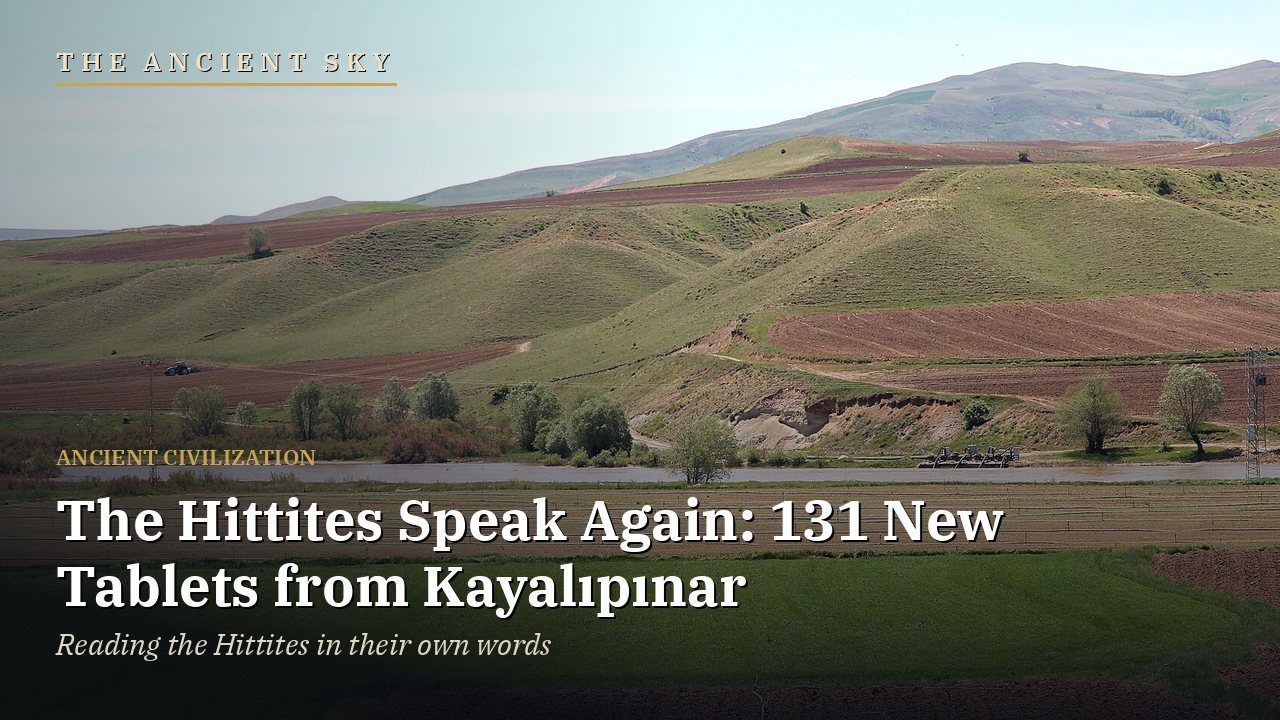
On October 8, 2026, Mehmet Nuri Ersoy, Turkey's Minister of Culture and Tourism, announced that the 2026 excavation at Kayalıpınar had yielded 131 cuneiform tablets and fragments. In a statement on social media, reported the same day by Anadolu Agency and Daily Sabah, he said the new finds, together with 53 tablets and fragments recovered in 2025, bring the archive to 184 documents. The tablets are written in Hittite and Hurrian and date to the reign of King Tudhaliya II, around 1400 BC, about 3,400 years ago. The ministry says the excavation team considers it the most extensive Hittite-language archive discovered in the twenty-first century.
Kayalıpınar is a mound beside the Kızılırmak River, in the Yıldızeli district of Sivas province in central Turkey, about forty kilometers west of the city of Sivas. It is the site of ancient Šamuḫa, a Hittite religious center that became an important military capital during Tudhaliya's reign. National Geographic published its own report by the historian Sarah Bond on October 26, 2026, which is how the story reached many English-language readers.
The announcement is brief and the tablets are not yet published. This article sets out what the ministry and the reporting say, what scholars quoted in the coverage have said, what has not been confirmed, and where the find fits in the long story of how the Hittites were lost and found.
§ 1What was announced, and what was not
The date and the numbers need to be stated carefully, because several versions are circulating. The announcement came on October 8, not this week. The figure of 131 is for the 2026 season only. The combined figure of 184 uses 53 for 2025. A September 2025 Anadolu Agency report on the previous season gave 56 tablets, along with 22 seal impressions, so there is a small discrepancy between the two counts for 2025. The reports available do not explain it. It may reflect a different counting of fragments, but that is a guess and not something the ministry has said.
The most repeated phrase is the "previously unknown epidemic." National Geographic uses it in its subheading, and writes that the tablets give details of "a plague that was previously unknown to historians." The ministry's own statement is narrower. It says the tablets record a high-fever epidemic that spread from city to city and affected children and infants in particular. It does not say that a new disease has been identified, and nobody could determine that from the words on clay alone. The more hedged language comes from Theo van den Hout, professor emeritus of Hittite and Anatolian languages at the University of Chicago and editor emeritus of the Chicago Hittite Dictionary Project, who was not part of the excavation. He told National Geographic that "the newly reported epidemic seems like a new plague," and that it is "certainly not the later one" known from the reign of Muršili II. That is an expert's first impression of a press statement, not a published finding.
Three more points. The priests described in some retellings as fortune tellers are specifically bird diviners, who watched birds to read the will of the gods. The baby princess did not only fall ill. According to the ministry, one tablet records her death and the funeral rites performed for her. And this is a press announcement. No peer-reviewed publication of the 2026 tablets has appeared, and every reading described here is preliminary.
§ 2Where and what is Šamuḫa
Kayalıpınar lies on the northern bank of the Kızılırmak, which the Hittites called the Marassantija and the Greeks later called the Halys. The link between the mound and the city of Šamuḫa is not a guess. In October 2014, the University of Marburg announced that cuneiform tablets from its excavation named the place. The dig was led by Andreas Müller-Karpe, director of the university's Vorgeschichtliches Seminar, and the tablets were read by the linguist Elisabeth Rieken. The university said the project was financed by the German Research Foundation, and that excavations had begun in 2005. According to the ministry, the dig has been directed since 2021 by Çiğdem Maner of Koç University in Istanbul.
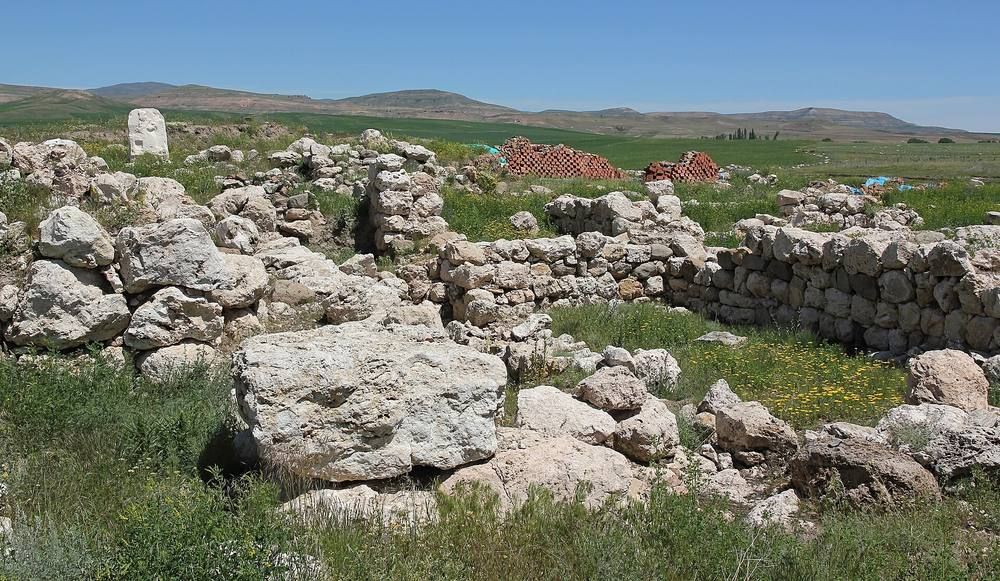

Šamuḫa was known from written sources before anyone found it. Marburg's release said the oldest mention dates to the nineteenth century BC, in Old Assyrian tablets from Kültepe, which show a palace in the city and a trading post of merchants from Assur, some 750 kilometers away. Where the city lay had been, in Müller-Karpe's words, a matter of fierce dispute among scholars.
In the fourteenth century BC the city became more important still. Marburg said the seat of government was moved to Šamuḫa for a time, that the great king it calls Tuthalija III set up his residence there and stayed until the end of his life, and that his son and successor Suppiluliuma I campaigned from there, retook the Hittite heartland and the capital Hattusa, and went on to build a great empire that competed with Egypt. National Geographic adds that in the period of the new tablets the mountainous Kaska peoples were attacking Hittite cities, including the capital, which made Šamuḫa more important as a military center. Marburg also said that the city was the scene of violent conflict within the royal house in the thirteenth century BC and was destroyed around 1200 BC.
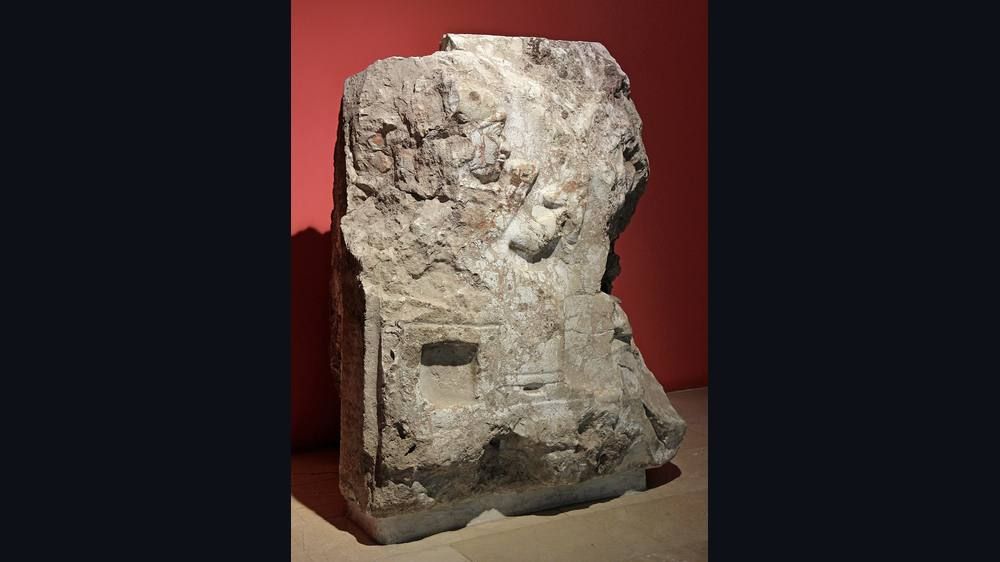

A caution on names. Scholars number the early kings called Tudhaliya differently, and the Marburg team's king "Tuthalija III" is not necessarily the ministry's Tudhaliya II. This article follows the ministry for the 2026 tablets and does not try to reconcile the numbering.
Two other claims should be handled with care. A retelling in circulation says a palace at Kayalıpınar was plundered and burned in this period. No excavation report confirming that was found, so it is left out here. And in 2024, Koç University reported traces of a monumental structure that may be the temple of the goddess Šauška. The excavators describe the identification as tentative, and it should be read that way.
§ 3What the tablets say
Reports of the ministry statement, by Anadolu Agency and Daily Sabah, list texts in several categories: divination, omens, letters, rituals and prayers. Hurrian, it should be said, is a separate language from Hittite.
One of the documents is a letter. According to the ministry, Hittite generals in western Anatolia wrote to the king at Šamuḫa that Hittite territory was surrounded by enemies. They asked for soldiers, horses and chariots, and warned that the army could be destroyed if help did not arrive. The reports add that the generals said they would not accept responsibility for the consequences if support was not sent. It is an ordinary and very human document: a field commander in trouble writing home for reinforcements.
The category that scholars are likely to study most closely is divination. The Hittites did not make important decisions without consulting the gods, and they did so in several ways, including by examining the entrails of animals and by observing birds. Officials called bird diviners watched which birds appeared, in which direction they flew and what they did, and recorded the results. According to Daily Sabah, one new tablet records the journeys of bird diviners who left Šamuḫa and traveled through different regions, noting their routes, the cities where they stayed and the birds they observed, in a format resembling a diary. The ministry says the documents also provide previously unknown information about how bird omens were observed and interpreted. National Geographic notes that a tablet found at the site in 2023 also noted the interpretation of bird flight paths, and quotes the scholar of ancient religion Ian Rutherford, who has called the practice "largely opaque." A dated, place-by-place record of what a diviner saw is exactly the kind of text that could change that.
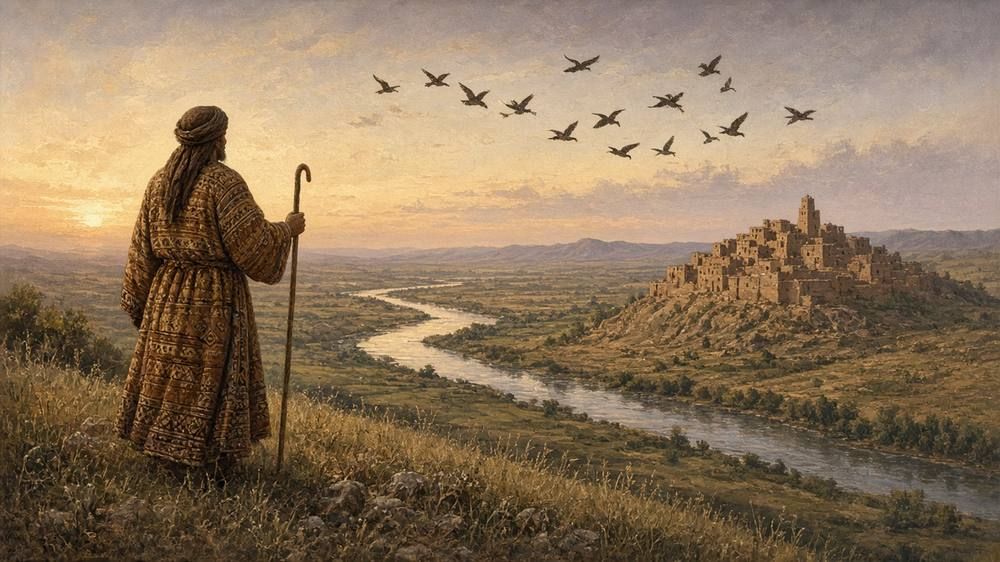
Earlier seasons also pointed this way. Reporting on the 2025 finds, Archaeology magazine said that several of the tablets concern bird divination, and that the texts record inquiries put to the diviners, called lumushen, about the fates of royal heirs such as crown princes and princesses.
§ 4The epidemic and the princess
The ministry statement says that some tablets describe a high-fever illness moving from city to city, with children and infants hit hardest. According to Daily Sabah, the health of young princes and princesses, and of children of high-ranking officials, was monitored through divination rituals during the outbreak. One document describes a baby princess who was still being breastfed and whose health was watched closely, with diviners seeking to learn her future through omens. Another tablet records her death and her funeral rites. A separate tablet, sent to the king by a diviner, indicates that she fell ill in a city called Ziulila, whose location has not been identified.
The limits are plain. The public record so far is a few sentences from a ministry statement and the reports built on it. The princess's parentage is not given in the reports. The nature of the illness is not given either. What can be said is that a Bronze Age scribe thought the illness and death of a baby princess worth recording on clay, and that the state responded to the outbreak in the way it knew, by asking the gods.
§ 5An epidemic nobody has named
The Hittites knew epidemics. The famous case is the plague that began in the days of Suppiluliuma I and continued under his sons. His son Muršili II, who reigned from about 1321 to 1295 BC, left a set of Plague Prayers. In one he says that "it is twenty years since people have been continually dying in the interior of Hatti." He consults oracles and concludes that the gods are punishing a broken oath. According to the University of Texas teaching edition, the cause, found by oracle, was that the Hattians had broken their word, given in a treaty under oath to the Storm-god. Van den Hout, in National Geographic, notes that this plague was allegedly "imported" by Egyptian prisoners of war. That is the ancient explanation, and it is a story rather than evidence about how a disease spread.
What was the disease? A 2007 paper in the journal Medical Hypotheses by Siro Trevisanato argued that it was tularemia. It is an interesting hypothesis, and it is only that. The prayers name no symptoms that settle the question, and no ancient DNA has been recovered from the period to test it. The new tablets date to about 1400 BC. By simple subtraction from the dates above, that is roughly eighty years before Muršili's accession, though all of these dates are approximate. That fits van den Hout's remark that the new epidemic is not the later one. If the translations hold up, the Hittite record would contain a second epidemic. But "previously unknown" means unknown to historians. It does not mean that a lost disease has been identified, and it does not mean the two outbreaks had anything in common.
§ 6Why clay tablets survive
It may seem surprising that letters from 3,400 years ago can be read when so much of the ancient world is gone. The reason is clay. Paper, papyrus, wood and leather rot, burn and are eaten. A clay tablet, even one only dried in the sun, can be hardened by fire when the building around it burns, becoming something close to pottery. The destruction of a palace, a disaster for the people in it, is often the reason an archive exists for us at all. National Geographic notes that around 30,000 tablets and fragments come from Hattusa, the royal capital, and that archive transmits largely elite and royal perspectives.
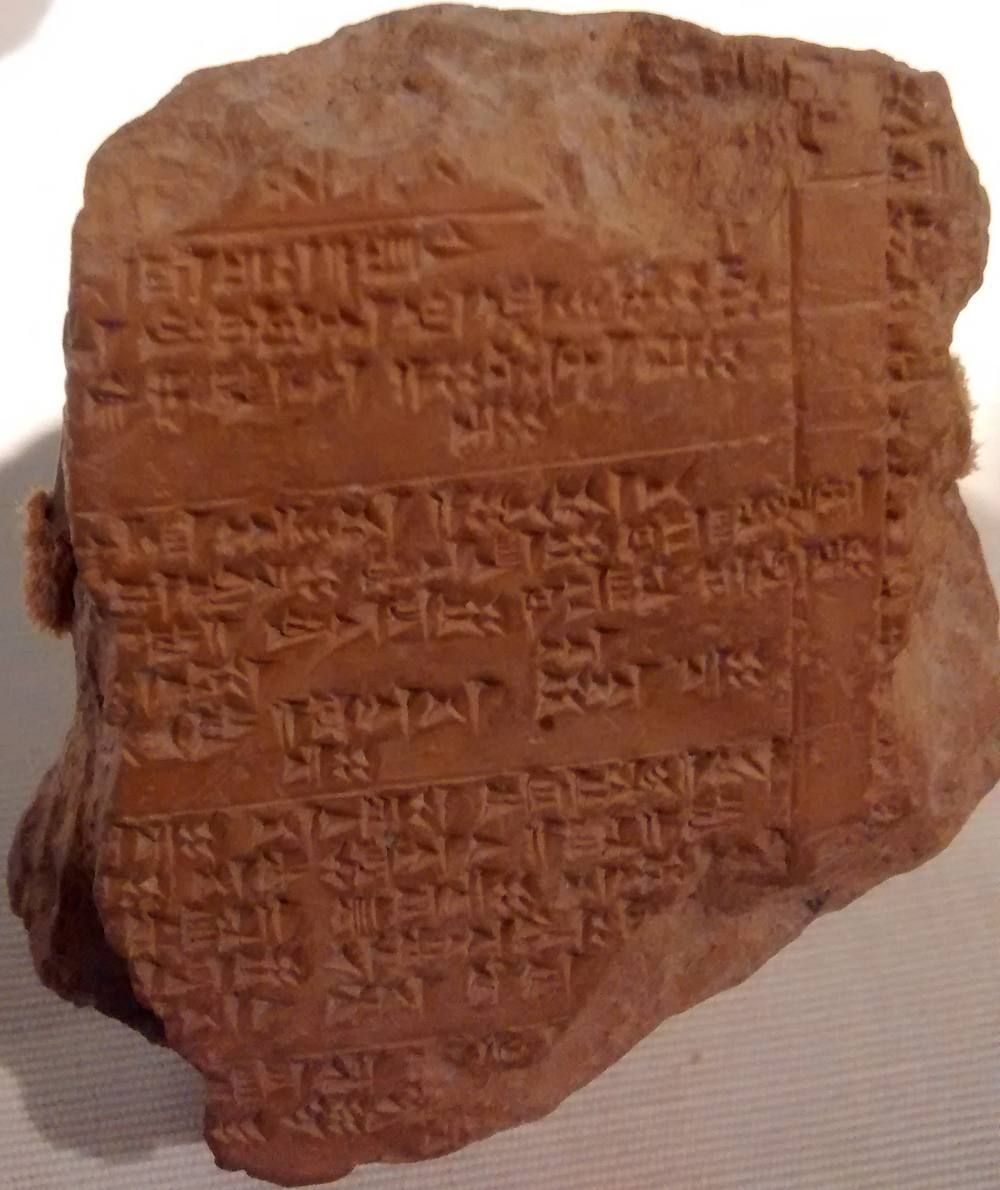

Survival is still a lottery. Many of the pieces from Hattusa are small, and a scribe's whole letter may come down to us as one corner with a few signs. This is why the Šamuḫa material matters. Eric Cline, the archaeologist and Bronze Age specialist who was not involved in the dig, told National Geographic: "There are very few archives that we have found outside the capital city. The ones from Šamuḫa are some of the first. They further confirm it was an important Hittite city." Such an archive lets historians look at a provincial, military and religious city and not only at the royal view from the capital.
§ 7How a tablet becomes a translation
A press release shows only the last step of a long process. A tablet comes out of the ground and is photographed, cleaned and often conserved. A specialist reads the signs and writes them out as a transliteration. Hittite is a mixed case, because scribes wrote it in the cuneiform script of Mesopotamia. Some words are spelled syllable by syllable in Hittite. Others are Sumerian signs used as shorthand, called Sumerograms, and others are Akkadian words, called Akkadograms. In the usual conventions, these are written in capital letters in transliteration so that a reader can see at a glance what is Hittite and what is borrowed.
Then comes the philology: working out the grammar, comparing parallel texts and checking fragments against catalogues of known Hittite texts. Only then does an edition appear, and other scholars argue with it. That is why a first announcement is a good guide to subject matter and a poor guide to detail.
New technology is helping. The University of Würzburg reports that the Palaeographicum, developed with the Technical University of Dortmund and the Mainz academy, uses artificial intelligence to cut cuneiform characters out of photographs and compile them in image tables. It gives access to 70,000 photos documenting more than five million characters. The shape of a sign can help date a tablet, which matters because Hittite tablets are rarely dated. National Geographic reports that researchers at Würzburg and the Academy of Sciences and Literature in Mainz are now using artificial intelligence to help distinguish the possible identities of Hittite scribes and date fragments.
§ 8The empire that was forgotten
Not very long ago, nobody knew that a Hittite Empire had existed. The Hittites were a name in the Bible. In the Book of Genesis, Abraham buys a burial cave from Ephron the Hittite, and Uriah the Hittite is a soldier in King David's army. In the nineteenth century, according to the Armstrong Institute, some scholars used the Bible's Hittites to doubt its accuracy. The Oxford professor Francis William Newman referred to the references as "unhistorical." The Institute also cites William Wright's 1882 thesis, "The Hittites and the Bible." A. H. Sayce, in his 1888 book on the Hittites, quotes an unnamed critic who wrote that no Hittite kings could have compared in power with the king of Judah. The wording appears in Sayce's book. This article has not confirmed it in Newman's own text.
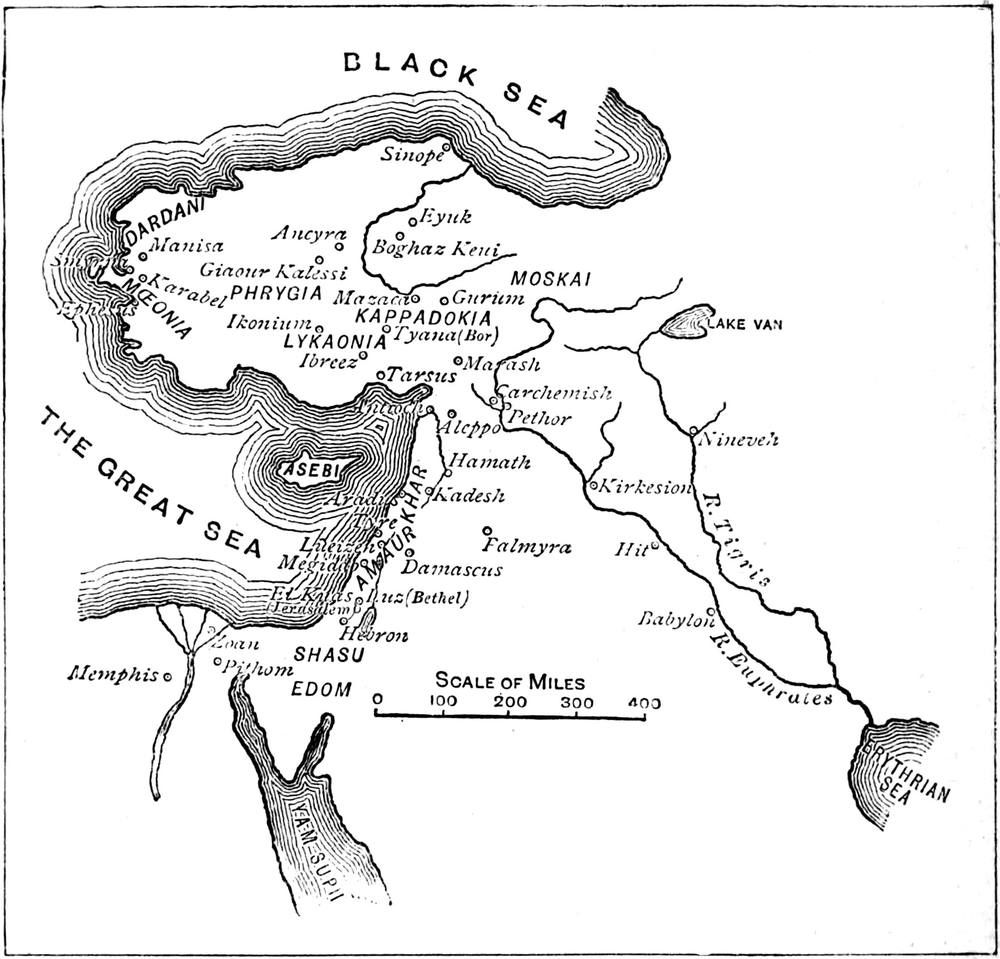

The picture turned from several sides. According to the Penn Museum, the site of Boğazköy had been known to European scholars since 1834, when Charles Texier visited and published an account and drawings of the visible ruins, but it was decades before anyone understood what city it had been. In 1872 William Wright secured copies of the strange inscribed stones at Hamath in Syria, and by 1876 Sayce was suggesting that the same hieroglyphs belonged to the Hittites. Sayce argued that these monuments belonged to a lost great power, and his central idea was right. Scholars today judge his own early attempts to read the hieroglyphs to have been largely mistaken.
The turn came with the spade and then the dictionary. In 1906 the Assyriologist Hugo Winckler, with Theodore Macridy Bey of the Ottoman Museum, opened excavations at Boğazköy, where tablets were found in large numbers. Winckler had been working on the Amarna Letters, found in Egypt in 1887, and hoped for similar tablets, according to the Penn Museum. Many were in Akkadian, which could be read, and one was a copy of a peace treaty with Egypt that identified the site as the Hittite capital, Hattusa. The language of the rest was unreadable until 1915. On November 24 of that year, in the middle of the First World War, the Czech scholar Bedřich Hrozný gave a lecture in Berlin on "The Solution of the Hittite Problem." He argued that Hittite was an Indo-European language, related to Latin, Greek and English. The Penn Museum says his decipherment "was greeted with great scepticism, but has proved to be correct." His best-known demonstration is a sentence usually translated as "Now you will eat bread, and you will drink water," which in Hittite reads nu NINDA-an ezzatteni watar-ma ekutteni.
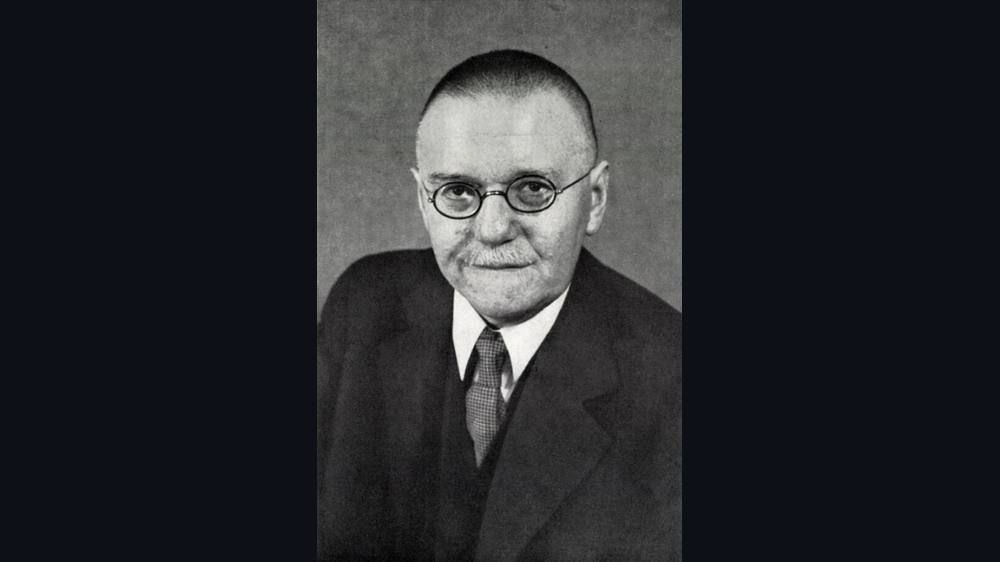

That is a reception history worth noting. A people the Bible mentioned, whom some writers dismissed as marginal, whom monuments then showed to have been real, and whose language turned out to belong to the family that includes most European languages. Scholars still debate how the Bible's Hittites relate to the Anatolian ones. But a great Hittite state was not invented. It was waiting under the soil.
§ 9Hattusa, Egypt and a famous peace treaty
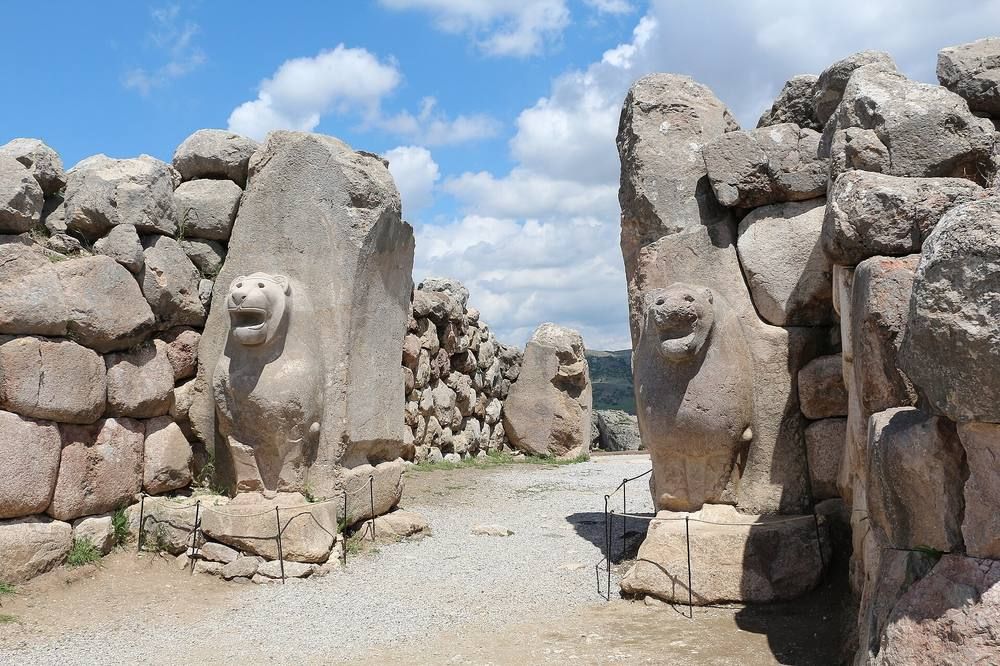
Hattusa is a UNESCO World Heritage Site, inscribed in 1986. UNESCO describes a monumental wall more than eight kilometers long around the whole city. The site has a royal citadel called Büyükkale, great temples, and gates guarded by carved lions and sphinxes. Nearby is the rock sanctuary of Yazılıkaya.

The Hittites also dealt with Egypt. About 1274 BC, by the usual chronology, King Muwatalli II fought Ramesses II at Kadesh, in what is now Syria. It is one of the best-known battles of the ancient world, mostly because Ramesses had scenes of it carved into temple walls, where it is presented as a victory. Smithsonian Magazine calls the real outcome a draw. Afterward the two powers remained rivals for years. In a treaty usually dated about 1259 BC, fifteen years after the battle by the historian Trevor Bryce's count, Ramesses II and Hattusili III agreed peace. Each side drew up its own version, and each was put into Akkadian cuneiform on silver tablets and exchanged. The silver originals are lost. Copies survive on clay tablets from Hattusa and in Egyptian hieroglyphs on the walls of the temple of Amun at Karnak. It is often called the world's first international peace treaty. Some sources, including the National Geographic and Smithsonian articles, date it to 1269 BC. Bryce gives 1259, which this article uses.
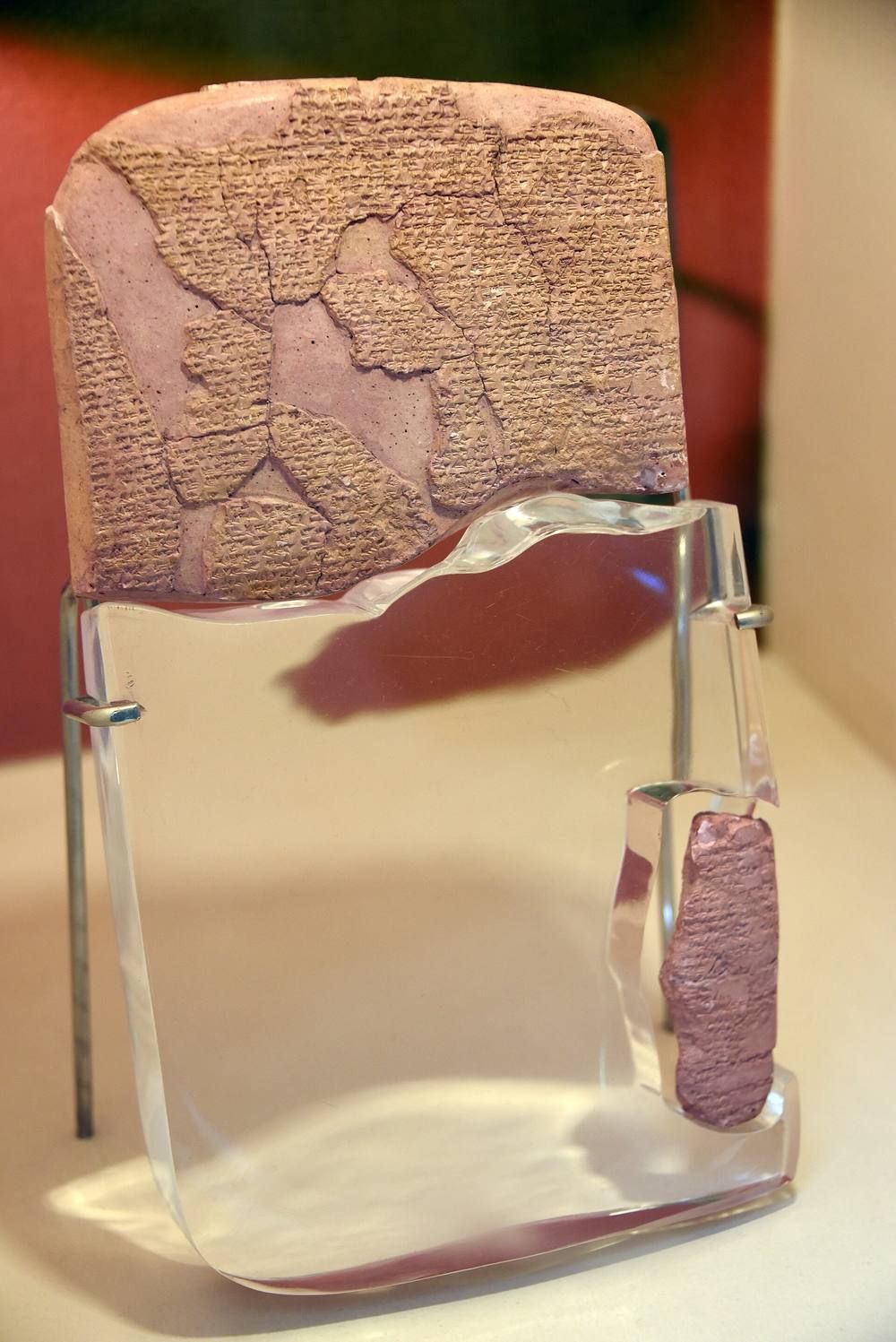

On September 21, 2026, Anadolu Agency reported that Minister Ersoy had announced that a fragment found at Büyükkale in Hattusa was part of a copy of the treaty, with lines on people who fled from one country to the other. That is a different find from a different site. It is mentioned only to show how quickly the field is moving.
§ 10The end of the empire and the Bronze Age collapse
The Hittite Empire did not last. Around 1200 BC the capital suffered destruction and the central state broke up. This is part of what is called the Late Bronze Age collapse, in which, over a few generations, much of the eastern Mediterranean lost palaces and trade links. Mycenaean Greece, Ugarit and the Hittite state are among the best-known casualties.
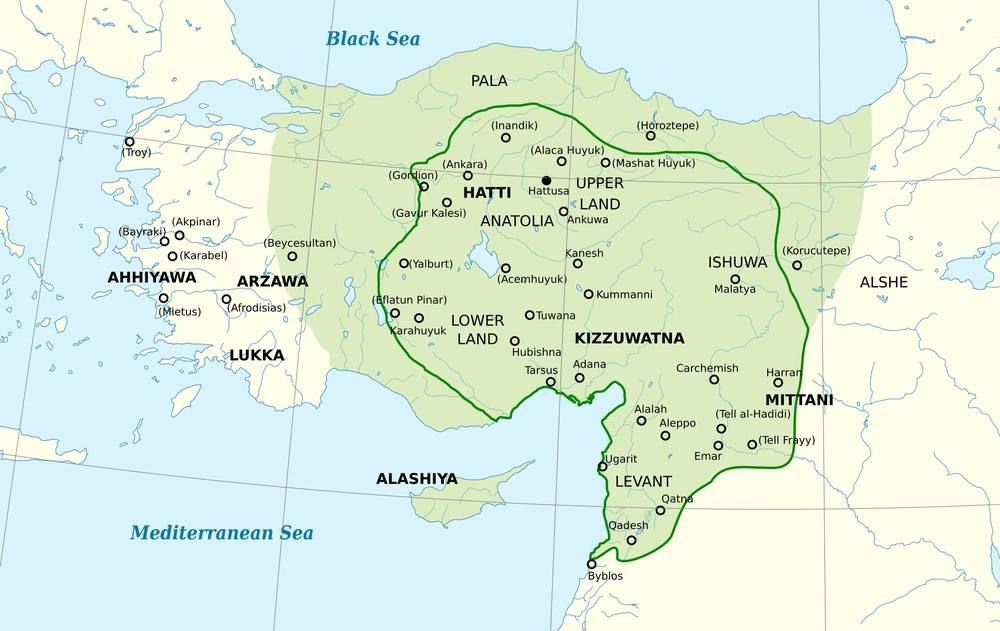

The cause is debated. The mainstream view, for example in Eric Cline's book 1177 B.C., is a combination of causes: drought and famine, earthquakes, internal rebellion, disrupted trade and the movements of the groups the Egyptians called the Sea Peoples, which together overloaded a tightly connected system. A 2023 paper in Nature by Sturt Manning and colleagues, using juniper tree rings from Gordion, found a severe multi-year drought in 1198 to 1196 BC, coincident with the Hittite collapse. The authors argue that it likely contributed, not that it was the only cause. Others hold that the destruction picture has been overstated. In a 2023 book, the archaeologist Jesse Millek surveyed the literature and found 148 sites with 153 destruction events ascribed to the end of the Late Bronze Age around 1200 BC, and concluded that 94 of them, 61 percent, had been misdated, assumed or never happened. Disease has also been proposed as a factor, but that remains a hypothesis and not a finding.
There are also fringe explanations. A well-known recent example was a 2021 paper in Scientific Reports arguing that a Tunguska-sized airburst destroyed the city of Tall el-Hammam in the Jordan Valley. That city dates to the Middle Bronze Age, centuries before the Hittite collapse, and the journal retracted the paper in April 2025, saying its conclusions were not sufficiently supported. No report of impact evidence from Hattusa or Kayalıpınar was found in preparing this article.
The new tablets are about two centuries older than the end, so they say nothing directly about 1200 BC. But they show a state that ran on archives, oracle reports, requests for troops and religious attempts to manage disease. That is background for any argument about how such a system fails.
§ 11What these finds do and do not prove
On the reports, the tablets show that Šamuḫa had a working archive around 1400 BC, in two languages, in one of the most important cities of the empire outside the capital. They show that the Hittite state kept detailed written records of bird divination and that a provincial center was involved in military logistics. According to the ministry, they record an epidemic that hit children hard.
They do not rewrite the history of the Hittites, give a new empire or prove a lost plague. They say nothing directly about the end of the Bronze Age. They are not a "lost civilization" in the sense used by Graham Hancock and others who argue for an advanced culture erased from the record, because the Hittites were never hidden from history in that way. They were lost to modern memory for many centuries and found again by ordinary methods, through travelers, excavators and philologists, with each step published and argued over. And the tablets are not yet published. The translations quoted here come from a ministry statement, news reports and the comments of scholars who were not part of the dig. Those details could change in the formal editions.
§ 12What would settle it
The next steps are unglamorous. The first is formal editions of the 2026 tablets in print, with transliterations that other Hittitologists can check. The second is joins with earlier Kayalıpınar tablets and comparison of scribal hands. The third is more digging, including at the possible temple of Šauška. On the epidemic, the first need is the text itself. After that comes physical evidence, such as burials from the period and ancient DNA, which is the only way a disease could ever be named. Until then, the accurate description is the one the ministry gave: a high-fever epidemic, affecting children, recorded by Hittite scribes about 3,400 years ago.
A mound in central Turkey gave up its first tablets after excavations began in 2005. By 2014 scholars could name the city. By 2026 the archive stood at 184 documents, with soldiers asking for chariots, diviners watching birds and an epidemic that took a baby princess. Behind it is an empire that was nearly forgotten, rediscovered by travelers and scholars, and read in its own words once Hrozný showed what language it was.
Watch & Listen
Hear this entry read aloud. Coming soon — the channels are not live yet.
Sources
The 2026 announcement and coverage
- Sarah Bond, National Geographic, "A New Discovery Offers a Glimpse into the World of the Hittites, in Their Own Words" (October 26, 2026)
- Anadolu Agency (Turkish), "Sivas'ta Kral 2. Tudhaliya dönemine ait 131 çivi yazılı tablet gün yüzüne çıkarıldı" (October 8, 2026)
- Daily Sabah, "Hittite royal archive with 184 tablets unearthed in central Türkiye" (October 8, 2026)
- Hürriyet Daily News, "Cuneiform tablets from Hittite King unearthed"
Earlier seasons at Kayalıpınar (Šamuḫa)
- University of Marburg press release, "Forscherteam identifiziert 3500 Jahre alte Königsstadt" (October 16, 2014)
- DFG GEPRIS project record, Ausgrabungen in der Stadtruine Kayalipinar
- Anadolu Agency (Turkish), 2025 season, 56 tablets and 22 seal impressions
- Archaeology Magazine, "Hittite Site Yields Dozens of Cuneiform Tablets and Seal Impressions" (September 22, 2025)
- Anatolian Archaeology, possible temple of Šauška (2024 season)
- Anatolian Archaeology, bird divination tablets and royal seals at Šamuḫa
Hattusa, Egypt and the treaty
- UNESCO World Heritage Centre, Hattusha: the Hittite Capital (inscribed 1986)
- Trevor Bryce, "The 'Eternal Treaty' from the Hittite perspective"
- Anadolu Agency, "Tablet fragment found in Türkiye adds piece to world's oldest known peace treaty" (September 21, 2026)
- Smithsonian Magazine on the same fragment
Plague, tablets and translation
- Plague Prayer of Mursilis II, Linguistics Research Center, University of Texas at Austin
- Trevisanato, "The 'Hittite plague', an epidemic of tularemia and the first record of biological warfare," Medical Hypotheses (2007; publisher DOI links may block automated access)
- University of Würzburg, "AI reads cuneiform: A milestone for Ancient Near Eastern Studies"
- Palaeographicum, Würzburg and Mainz
Rediscovery of the Hittites
- A. H. Sayce, The Hittites: The Story of a Forgotten Empire (1888), full text, Project Gutenberg
- Penn Museum Expedition, "The Hittites and the Aegean World"
- Armstrong Institute, "Finding the Hittites" (attributes the "unhistorical" criticism to F. W. Newman)
- On Hrozný's November 24, 1915 Berlin lecture (Czech)
- Wikipedia, Hittites (historiography section): en.wikipedia.org/wiki/Hittites, with Grokipedia: grokipedia.com/page/Hittites
- Wikipedia, Archibald Sayce: en.wikipedia.org/wiki/Archibald_Sayce, with Grokipedia: grokipedia.com/page/Archibald_Sayce
- Wikipedia, Bedřich Hrozný
The Bronze Age collapse
- Manning et al., "Severe multi-year drought coincident with Hittite collapse around 1198-1196 bc," Nature (2023)
- Jesse Millek, Destruction and Its Impact on Ancient Societies at the End of the Bronze Age (Lockwood Press, 2023)
- Eric H. Cline, 1177 B.C.: The Year Civilization Collapsed (Princeton University Press, 2014); lectures page
- Retraction note, Bunch et al., Tall el-Hammam airburst paper, Scientific Reports (April 24, 2025)
Reference pages (Wikipedia and Grokipedia; no claim rests on these alone)
- Šuppiluliuma I: en.wikipedia.org/wiki/%C5%A0uppiluliuma_I, with Grokipedia: grokipedia.com/page/%C5%A0uppiluliuma_I
- Muršili II: en.wikipedia.org/wiki/Mur%C5%A1ili_II, with Grokipedia: grokipedia.com/page/Mur%C5%A1ili_II
- Tudḫaliya II
- Šamuḫa
- Kayalıpınar
- Egyptian-Hittite peace treaty: en.wikipedia.org/wiki/Egyptian%E2%80%93Hittite_peace_treaty, with Grokipedia: grokipedia.com/page/Egyptian%E2%80%93Hittite_peace_treaty
- Battle of Kadesh: en.wikipedia.org/wiki/Battle_of_Kadesh, with Grokipedia: grokipedia.com/page/Battle_of_Kadesh
- Hattusa: en.wikipedia.org/wiki/Hattusa, with Grokipedia: grokipedia.com/page/Hattusa
- Late Bronze Age collapse: en.wikipedia.org/wiki/Late_Bronze_Age_collapse, with Grokipedia: grokipedia.com/page/Late_Bronze_Age_collapse
Image sources (Wikimedia Commons)
- Kayalıpınar mound (photo: Ingeborg Simon)
- Kayalıpınar Building A (Ingeborg Simon)
- Kayalıpınar stele in Sivas museum (Ingeborg Simon)
- Hittite tablet, Oriental Institute (Mx. Granger)
- Sayce map of the Hittite Empire
- Hrozný portrait
- Lion Gate, Hattusa (Bernard Gagnon)
- Kadesh treaty tablet, Istanbul (Osama Shukir Muhammed Amin)
- Map of Hittite rule (Sémhur)
- The ministry's photographs of the 2026 tablets and National Geographic's photo illustration are copyrighted press images. They are linked through the coverage above and not reproduced here.
- Two illustrations in this story are AI-generated and are labeled as such.
