SpaceX-Tesla
Falcon 9 at 16: How SpaceX's Workhorse Rocket Evolved, and What Comes Next
By Darrell Wallen
Would you prefer to listen?
From a first version that flew just five times to a booster that has flown 37 times, Falcon 9 rewrote the economics of spaceflight. Now SpaceX's founder says winding it down is "inevitable," but the timing depends on Starship.
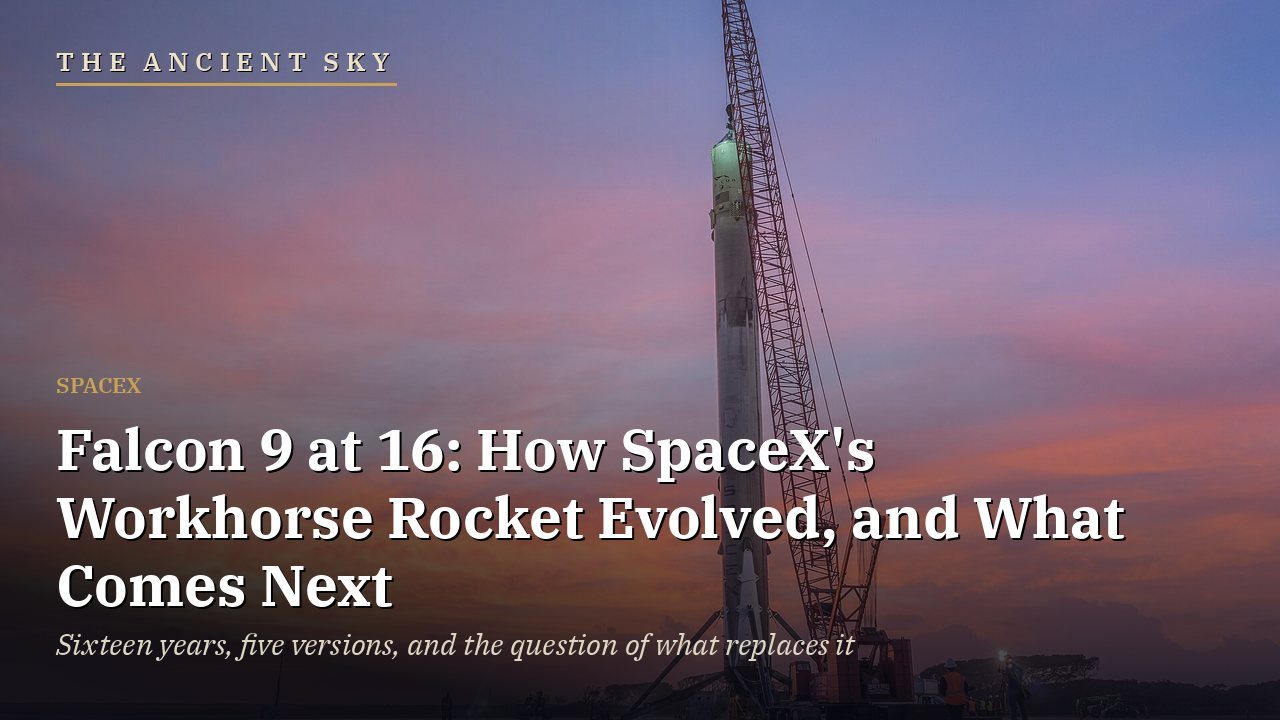
No rocket flying today launches as often as Falcon 9. Since its first launch in June 2010, it has flown close to 700 times. It has carried astronauts to the International Space Station, launched most of the satellites in SpaceX's Starlink network, and turned the landing and reflying of an orbital booster into routine work.
In 2025 it flew a record 165 times. On August 25, 2026, one booster made its 37th flight, the most for any orbital rocket booster. Yet the company that built it is already planning for life after it. SpaceX founder Elon Musk wrote on X in August that winding down the Falcon family is "inevitable" once Starship is flying reliably.
This is the story of how Falcon 9 got here. It covers how the rocket is built, how it changed through five versions, how SpaceX learned to land and refly it, what reuse is worth, where the rocket has failed, what it carries today, and what its future looks like. For the larger picture of the company, see our overview of SpaceX. For the rocket that is meant to replace this one, see our article on Starship's evolution. For who else is trying to compete, see our article on the competition.
§ 1How Falcon 9 works
Falcon 9 is a two-stage, liquid-fueled rocket that burns kerosene and liquid oxygen. Its first stage, the booster, is powered by nine Merlin engines, which is where the "9" in the name comes from. The second stage uses a single Merlin engine modified to work in the vacuum of space.
According to published specifications, each Merlin 1D engine on the current booster produces roughly 845 kilonewtons of thrust at sea level, a figure SpaceX lists on its vehicle page. Together, the nine engines give the booster about 7,600 kilonewtons at liftoff, which SpaceX gives as more than 1.7 million pounds of thrust.
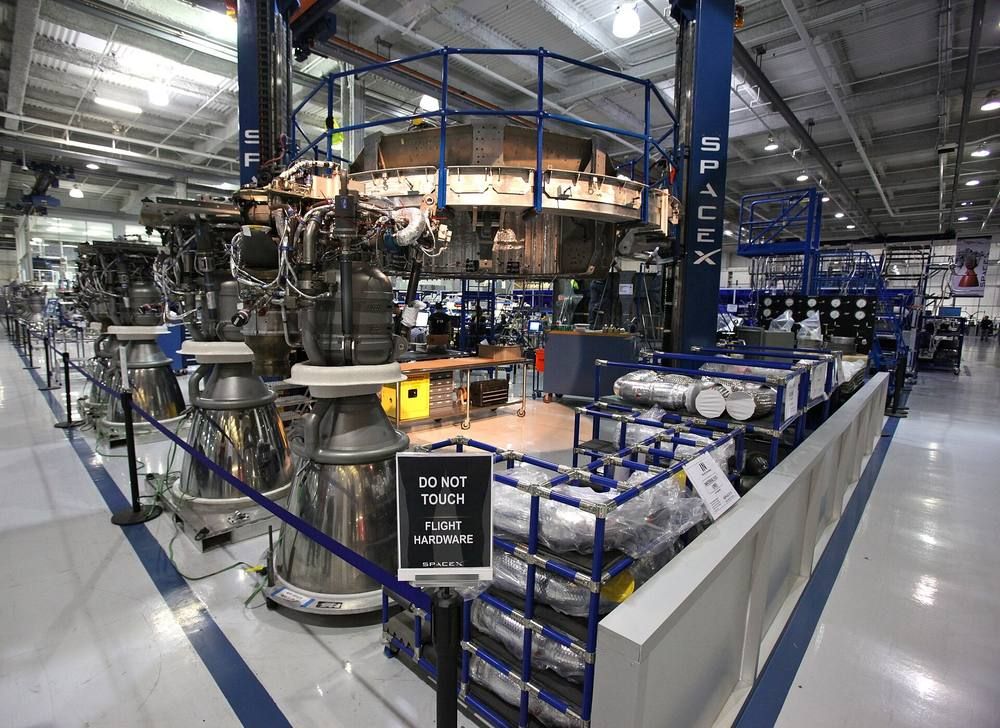

The second-stage engine has a large nozzle extension designed to get the most out of thin air, or no air at all. SpaceX's vehicle page lists its vacuum thrust at 981 kilonewtons. SpaceX also flies a version with a shorter nozzle on some missions, for payloads that do not need the extra performance. We could not find a primary source for how much thrust or material that shorter nozzle trades away, so we do not give a figure.
The booster does the heavy lifting for the first two and a half minutes or so, then separates. On most missions it flips around, relights some of its engines to slow down and steer back, and deploys four grid fins near the top to control its fall through the atmosphere. Just before touchdown it fires again and lowers four landing legs. The second stage continues to orbit and is not recovered.
The current Falcon 9 stands 70 meters tall and 3.7 meters wide, and weighs about 549,000 kilograms at liftoff. SpaceX lists its capacity at 22,800 kilograms to low Earth orbit and 8,300 kilograms to the higher geosynchronous transfer orbit used by many communications satellites. Those figures assume the booster is thrown away rather than landed. Carrying the extra fuel needed to land reduces them.
§ 2Five versions in eight years
The basic layout of nine engines below and one above has stayed the same since 2010. Almost everything else has changed.
Falcon 9 version 1.0 flew first on June 4, 2010, carrying a test version of the Dragon capsule. It used nine Merlin 1C engines arranged in a three-by-three grid and flew five times between 2010 and 2013. None of its boosters were recovered.
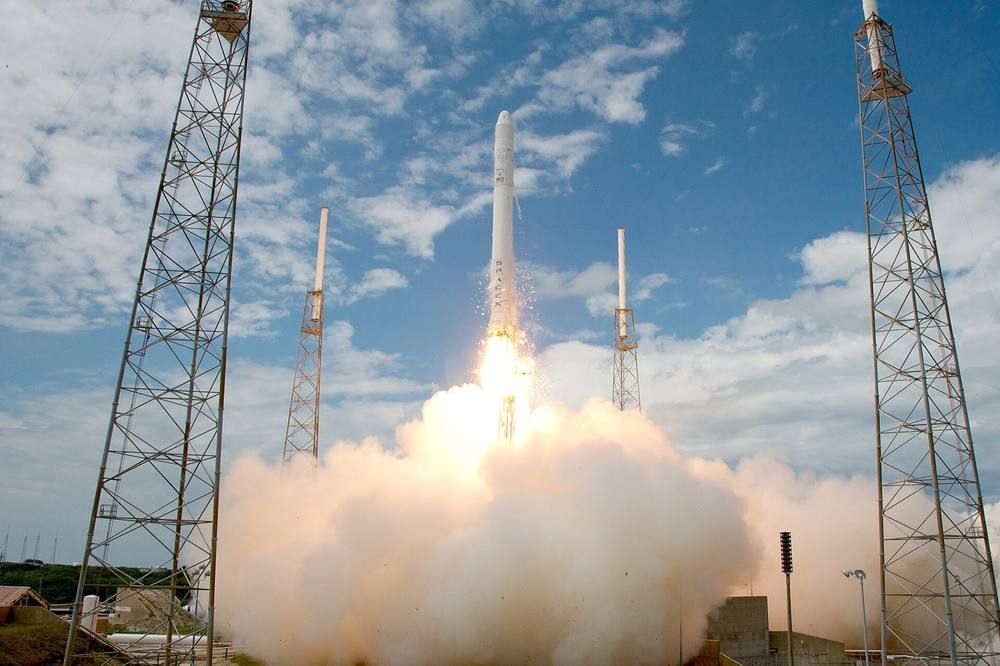

Version 1.1 debuted on September 29, 2013, with the Canadian CASSIOPE satellite. It was a substantially larger rocket and switched to the more powerful Merlin 1D engine, producing about 5.9 meganewtons of thrust at liftoff, according to Spaceflight Now's launch coverage. SpaceX used this version to begin testing how to bring boosters back, first with controlled descents into the ocean and then with attempts to land on a floating drone ship. We do not give a count of those test flights, because we could not confirm one from a primary source. The first successful drone-ship landing came on April 8, 2016, on the CRS-8 cargo mission, a few months after the first landing on land.
Falcon 9 Full Thrust, sometimes called version 1.2, first flew on December 22, 2015, Universal Time, which was the evening of December 21 in Florida. That is why you will see both dates in print. It had larger propellant tanks, uprated engines, and "densified" propellant, meaning liquid oxygen and kerosene chilled well below their normal temperatures so that more of each fits in the tanks. It was the first version to land a booster after launching a payload to orbit.
Block 4 followed on August 14, 2017, on the CRS-12 cargo mission to the space station. It served as a stepping stone between the early Full Thrust boosters and the final design.
Block 5 first flew on May 11, 2018, launching Bangladesh's first communications satellite. SpaceX designed it specifically for rapid, repeated reuse. When it debuted, the company said Block 5 boosters were expected to fly about 10 times before needing major refurbishment and, with periodic overhauls, possibly as many as 100 times. Block 5 is the only version still flying.
The 100-flight figure remains a design aspiration, not a demonstrated limit. As of mid-2026, Space.com reported that six Falcon 9 boosters had each flown at least 30 times. The record holder, booster B1067, is at 37.
§ 3Landing, then flying again
On December 21, 2015, local time, a Falcon 9 launched 11 ORBCOMM satellites from Cape Canaveral. About nine minutes later, its first stage touched down upright at Landing Zone 1. It was the first time an orbital-class rocket booster had launched a payload and then landed.
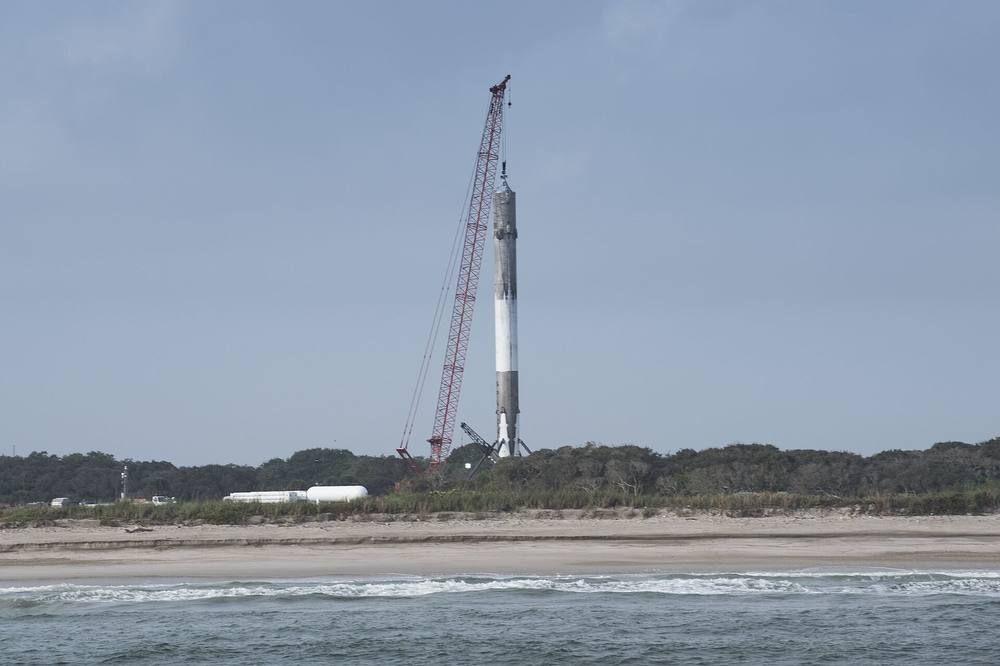

It took another 15 months to prove the booster could fly again. On March 30, 2017, SpaceX launched the SES-10 communications satellite on a booster that had first flown in April 2016 on a cargo run to the space station. It was the first reflight of an orbital-class booster. The satellite operator SES described it as the first time a reused Falcon 9 booster had put a satellite into geostationary transfer orbit.
What followed turned reuse from an experiment into the normal way of doing business. Boosters now land either on autonomous drone ships stationed in the Atlantic or Pacific, or on landing pads near the launch site. In February 2026, SpaceX opened a new pad, Landing Zone 40, beside its Space Launch Complex 40 at Cape Canaveral. A booster touched down there for the first time after the Crew-12 astronaut launch on February 13. Landing Zone 1 has stayed in use too, and received a Falcon Heavy side booster in October.
The numbers show how routine landing has become. Spaceflight Now counted B1063's landing on October 23 as the 673rd successful Falcon booster landing, a figure that includes Falcon Heavy boosters. B1067 flew its 36th mission in July 2026 and its 37th on August 25, a flight that was also Falcon 9's 100th of the year. Among reusable vehicles that have flown to orbit, only the Space Shuttle Discovery, with 39 flights, has gone more times.
The people behind the landings have been recognized too. This year, SpaceX's Falcon 9 booster landing team received Purdue University's 2026 Neil Armstrong Space Prize.
§ 4What reuse is worth
SpaceX's published capabilities sheet lists a standard Falcon 9 launch at $74 million, a price marked valid through 2026. That is the price to customers. SpaceX does not publish detailed cost figures, so everything below comes from Musk and from outside analysts, not from audited accounts.
In a 2020 interview, Musk said refurbishing a recovered booster costs about $250,000, and he put the marginal cost of a reused Falcon 9 launch at about $15 million. Roughly $10 million of that is the second stage, which is built new for every flight. An outside analysis this year estimated refurbishment at about $300,000, covering inspections, engine checks, X-ray and ultrasonic testing, limited part replacement, cleaning, and a test firing.
The savings were much smaller at first. Before reuse began, SpaceX President Gwynne Shotwell projected about a 30 percent cost saving from reflying the first stage. After the first reflight in 2017, she said the reused booster cost "substantially less than half" of a new one, even though the company had done far more inspection work on it than it planned for later boosters.
Analysts note that most of the financial benefit of reuse is captured early. According to one 2026 analysis, SpaceX depreciates its boosters over 25 flights, and by about the tenth flight most of the savings from spreading out the cost of building a booster have been realized. Every flight after that is close to pure gain, though the wear on the hardware is real and is what the periodic overhauls are meant to manage.
That cost advantage is a large part of why Falcon 9 dominates the market. It is also why SpaceX can launch its own Starlink network at a pace no other satellite company can match. The flip side, which critics raise, is a market with very little competition on price. The next article in this series looks at the rivals who are trying to change that.
§ 5Setbacks along the way
Falcon 9's record includes failures, and each one changed how the rocket is built or flown. SpaceX counted its 700th Falcon-family mission on September 13, a tally that includes five flights of the small Falcon 1, so Falcon 9 and Falcon Heavy together have flown a little over 700 times. Across them there have been two in-flight failures, the CRS-7 mission in 2015 and Starlink 9-3 in 2024, and one partial failure, in October 2012, when a Merlin engine shut down early on the first operational cargo flight to the space station. Dragon reached the station, but a small secondary satellite, Orbcomm's OG2, was left in an orbit too low to keep and was lost. By our own arithmetic that is a success rate of about 99.6 percent, which is also the figure Grokipedia's Falcon 9 page gives. A rocket that sat on the pad in 2016 and was destroyed in a fueling accident did not fly, so it is not counted in that rate. The record is very high by historical standards, but it is worth looking at the incidents themselves, because several are recent.
On June 28, 2015, the CRS-7 mission was lost about 139 seconds after liftoff when an overpressure event in the second stage destroyed the rocket and the Dragon cargo ship it was carrying to the space station. SpaceX traced it to a failed strut holding a helium tank inside the liquid-oxygen tank. NASA's independent review found that the strut was an industrial-grade part used without adequate screening and testing.
In September 2016, a Falcon 9 exploded on the launch pad while being fueled ahead of a routine engine test, destroying the Amos-6 communications satellite it was due to carry. SpaceX later said the cause was a buckled liner inside the helium pressure tanks, which allowed oxygen to build up and ignite.
The more recent problems cluster around the second stage. In July 2024, on the Starlink 9-3 mission, a crack in a pressure-sensor line caused a liquid-oxygen leak, and the upper stage failed to deliver its satellites to the planned orbit. It was the first Falcon 9 mission failure since 2016, and the Federal Aviation Administration grounded the rocket for about two weeks until corrective actions were complete.
In August 2024, booster B1062 tipped over and burned on its drone ship after landing, ending a run of 267 consecutive successful landings, as Spaceflight Now reported. In September 2024, after the Crew-9 launch, the second stage's deorbit burn was off-nominal, as NASA's safety panel later noted. In February 2025, a Starlink second stage that had failed to deorbit stayed in orbit for about 18 days, launched on February 1 and reentering on February 19, and then fell uncontrolled over Europe, with debris found near Poznań, Poland. SpaceX said a small liquid-oxygen leak during the coast phase caused the failed deorbit burn, as SpaceNews reported. In March 2025, a booster caught fire and tipped over after a drone-ship landing.
Then, in February 2026, on the Starlink 17-32 mission, the second stage failed to perform its deorbit burn after delivering its satellites. SpaceX said a gas bubble was the cause, according to Space.com. SpaceX paused launches for about four days during an FAA-required investigation and returned to flight on February 7. Space.com counted it as the fourth second-stage problem in 19 months.
Outside safety reviewers have noticed the pattern. NASA's Aerospace Safety Advisory Panel, an independent group that advises the agency, warned in late 2024 that repeated Falcon 9 upper-stage anomalies called for continued focus as operations accelerated. Its 2025 annual report urged NASA and SpaceX to watch for cumulative risk from the very high launch tempo, while also praising SpaceX's openness in reporting anomalies. That balance is fair to keep in mind. SpaceX flies so often that even a very good record produces a steady trickle of incidents, and the company has generally returned to flight within days. But the rocket is also the one NASA uses to carry people, and with a stage flying every two to three days, any systemic problem would reach many missions at once.
§ 6The rocket that carries almost everything
Falcon 9's workload is unlike that of any other rocket. For the company behind the rocket, its mission and its business, see my standalone SpaceX overview.
Starlink drives most of it. Of the 165 Falcon 9 launches in 2025, 123 carried Starlink satellites, and Reuters reported that about 79 percent of Falcon 9 launches in 2026 have been Starlink missions. SpaceX is, by far, its own biggest customer. As of October 23, Space.com counted that day's Starlink launch as the 116th Falcon 9 flight of 2026, with about three-quarters of them dedicated to Starlink. There have also been three Falcon Heavy flights this year.
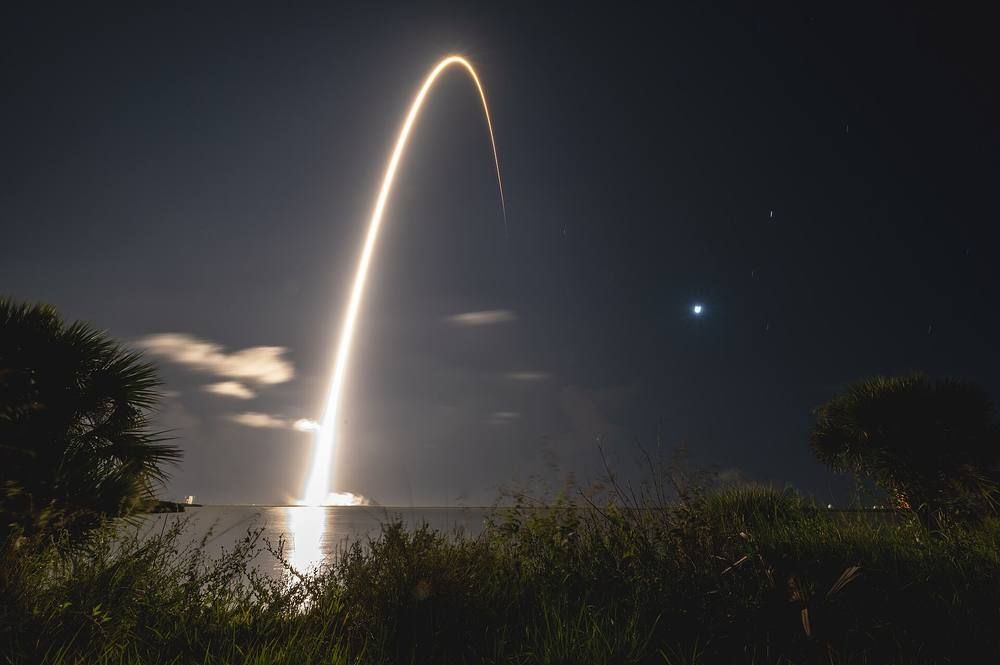

It is also NASA's ride for astronauts. Since May 2020, Falcon 9 and the Crew Dragon capsule have carried NASA astronauts to the space station, ending the United States' reliance on Russian Soyuz rockets after the space shuttle retired in 2011. NASA's Crew-12 launched on February 13, 2026, and Crew-13 reached the station on October 1. Falcon 9 has also launched private crewed flights, including Axiom Mission 1 in 2022 and Axiom Mission 2 in 2023.
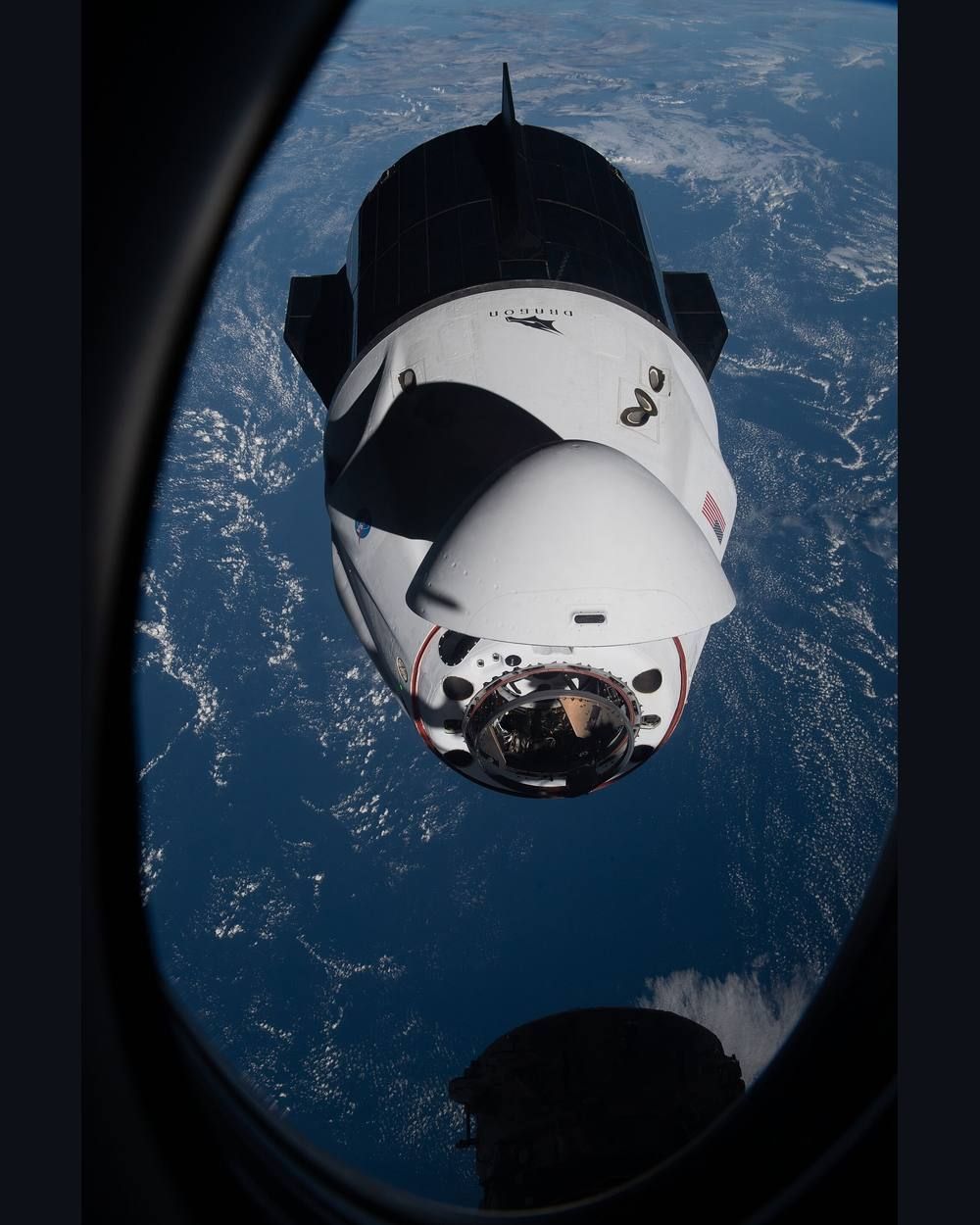

The crew contract is still growing. On September 18, 2026, NASA announced a $946 million modification to SpaceX's commercial crew contract, adding Crew-15, Crew-16, and Crew-17. That brings the contract to 17 missions and about $5.92 billion in total value, with performance running through 2030. NASA's decision to buy more Dragon flights is a notable counterweight to the retirement talk below, at least for the space station era.
Uncrewed Cargo Dragon capsules resupply the station regularly, most recently with a science and cargo mission launched October 13, 2026. For national security, the National Reconnaissance Office, which operates U.S. spy satellites, had flown 22 missions on Falcon 9 before it chose Falcon Heavy for the first time, with the NROL-97 mission described below.
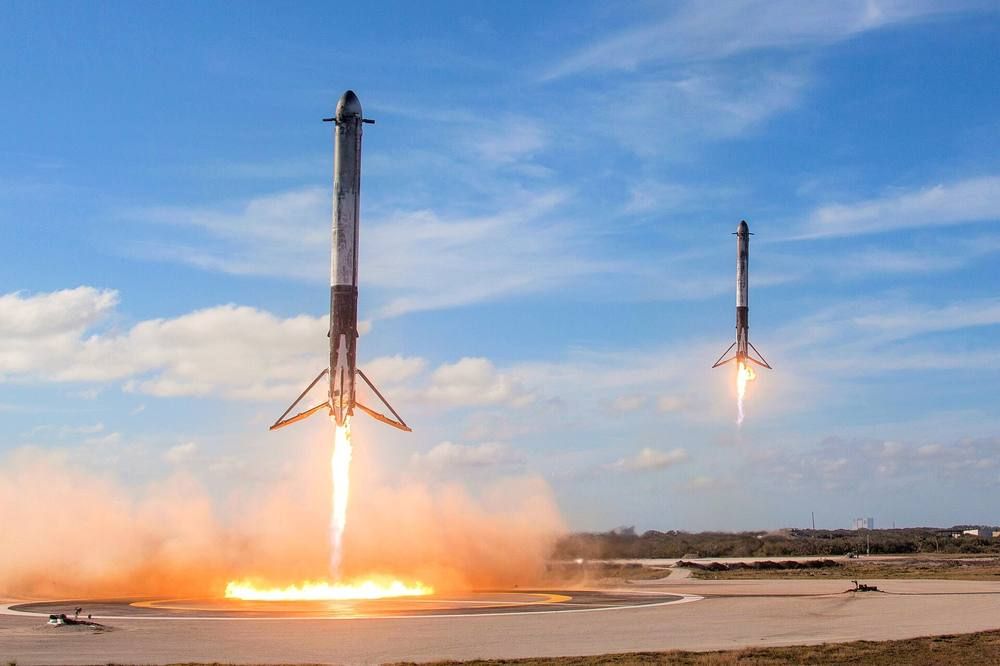
Falcon Heavy is the building block that grew out of Falcon 9. It straps together three first stages derived from Falcon 9. Its first flight, on February 6, 2018, sent a Tesla Roadster with a spacesuit-clad mannequin named Starman into orbit around the sun. Its two side boosters landed side by side at Cape Canaveral, while the center core ran short of propellant and hit the ocean about 100 meters from its drone ship. On October 1, 2026, a Falcon Heavy launched the NRO's classified NROL-97 mission, which Spaceflight Now counted as the rocket's 14th flight and the first for that agency. Both side boosters again returned to land. It came just 32 days after the previous Falcon Heavy launch, the fastest turnaround between Falcon Heavy flights so far.

§ 7A busy year, but a slower one
By August 25, Falcon 9 had flown 100 times in 2026. By October 23, it had flown 116 times, plus three Falcon Heavy flights. SpaceX President Gwynne Shotwell's guidance for the full year was roughly 140 to 145 launches, "maybe 140, 145-ish" in her phrasing, which would be below 2025's record of 165. Space.com's own projection at the current rate is "just under 150." Space.com has described a slowing launch pace, noting that Falcon 9 flew no Starlink missions between September 19 and October 12, an unusually long gap. A Starlink mission on October 23 finally flew after three scrubs on booster B1063.
The February stand-down accounts for only a few days of the shortfall. SpaceX has not published an explanation for the longer gaps, so the causes remain unclear, and it would be a mistake to assume the slowdown is a deliberate handoff to Starship. Starship has so far flown to orbit only once.
§ 8Starship and Falcon 9's future
The biggest change in Falcon 9's outlook comes from SpaceX's own next rocket. Starship has its own standalone article on The Ancient Sky, which follows every flight so far.
On August 22, 2026, Musk wrote on X that winding down Falcon, both Falcon 9 and Falcon Heavy, is "inevitable." He tied the timing to Starship: "Once Starship is flying reliably several times per week, it makes sense to shift … production resources to Starship to get launch rate to several times per day."
That condition has not been met. Starship reached orbit for the first time on September 28, 2026, but it has flown to orbit only once, and as of late October SpaceX had not set a date for Flight 15. As of early October, SpaceX had announced no formal end to Falcon 9 production. Musk's timelines for Starship have also slipped repeatedly, a subject our Starship article covers in detail, so a "several times per week" Starship is a goal rather than a forecast.
Still, the early signs of a transition are showing. Industry reports, as relayed by Space.com, suggest SpaceX may discontinue all but a few Falcon 9 missions beginning in 2028, with the remaining ones likely to be NASA crew and cargo flights to the space station. That would push commercial satellite operators toward Starship. These are industry reports, not a SpaceX announcement, and the company has not confirmed a cutoff date.
Reuters reported in August that at least seven spacecraft companies said Falcon 9 was booked through 2028 or 2029, a reminder that customers are still lining up for it in the meantime.
NASA Administrator Jared Isaacman said at a September 28 press conference that SpaceX intends to sunset older platforms like Falcon and Dragon as it focuses on Starship, according to coverage of that event. That is a statement about intent, not a schedule.
Starlink is the other driver. SpaceX's larger third-generation Starlink V3 satellites are designed to launch on Starship, not Falcon 9. Starship's first orbital flight deployed the first 26 of them. Since Starlink makes up about four out of every five Falcon 9 launches, every Starlink mission that moves to Starship is one Falcon 9 launch that no longer happens.
Taken together, that points to a gradual shift rather than a hard stop. For the next few years, Falcon 9 is still expected to carry NASA crews and cargo, national security payloads, and commercial satellites, while Starship takes over the biggest jobs, starting with Starlink.
§ 9What the retirement means for others
A retirement of Falcon 9 would not be neutral for the rest of the industry. Governments and companies that now buy Falcon 9 rides for science missions, communications satellites, and national security payloads would have to move to Starship, which has not yet shown it can fly often or carry customers' payloads reliably, or to other rockets. Some of those rivals, including Blue Origin's New Glenn and United Launch Alliance's Vulcan, have both been grounded this year, as our competition article explains. That makes the transition a question of concentration as much as technology. If one company's rocket is the only one flying, a problem with it affects everyone.
Supporters of SpaceX's approach would answer that this is exactly what fast, frequent flight is meant to avoid, because a rocket that flies several times a week finds and fixes its problems faster. Both views can be right. What the record cannot yet show is whether Starship will fly often enough, and safely enough, to carry that weight.
§ 10What to watch
Several signals will show how quickly the handoff happens. The first is Starship's flight rate. Musk's own condition is Starship flying "reliably several times per week," so each successful flight, and the gap between flights, is the clearest indicator.
The second is Falcon 9's year-end total. Whether 2026 lands near Shotwell's 140 to 145 launches, well below 2025's 165, will show how much work is already shifting. The third is Starlink: a growing share of satellites flying on Starship would directly reduce Falcon 9's workload.
The fourth is NASA's crew plans. The new $946 million order runs through 2030, and any announcement about crew transportation after that will define Falcon 9's last guaranteed missions. The fifth is second-stage reliability. Four upper-stage problems in 19 months is a trend to watch on a rocket that will keep flying people for at least several more years.
§ 11The outlook
Falcon 9 began as a rocket that could not be recovered and became the one that made reuse routine. It drove down the cost of reaching orbit, made the landing of a rocket booster something that happens several times a week, and showed that a single booster can fly dozens of times.
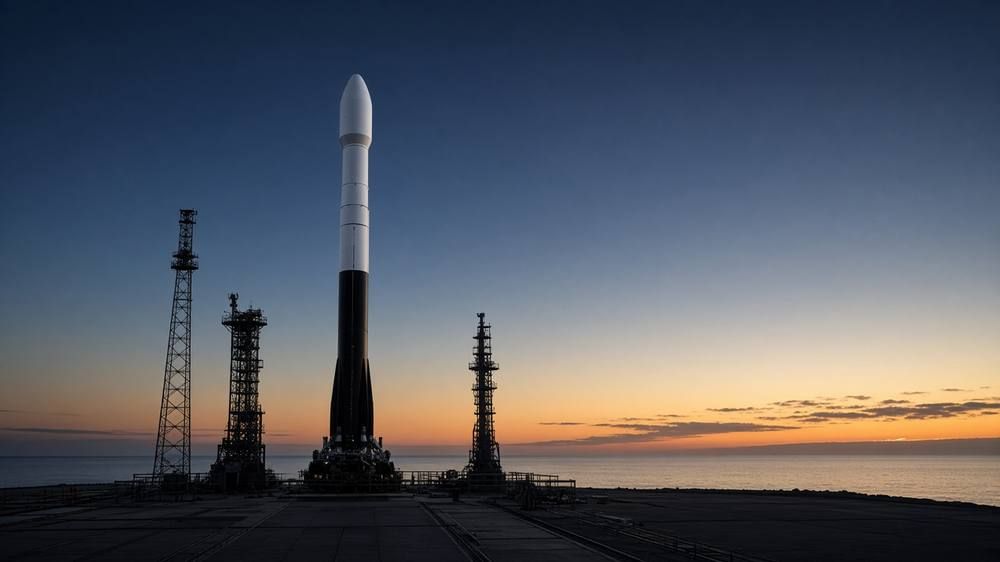
Its future now depends on how fast Starship matures. If Starship reaches the reliable, several-flights-a-week pace Musk described, Falcon 9's workload is likely to shrink, with commercial bookings reportedly tapering after 2028. If Starship is delayed, Falcon 9 remains the rocket that SpaceX, NASA, and much of the satellite industry depend on. Either way, the rocket that rewrote the rules of spaceflight is entering a new phase, and its record, both the successes and the setbacks, will shape how its successor is judged.
Watch & Listen
Hear this entry read aloud. Coming soon — the channels are not live yet.
Sources
Versions and specifications
- Space.com – Elon Musk explains Falcon 9 Block 5 improvements
- Scientific American – Why SpaceX's Block 5 is a big deal
- SpaceX – Falcon 9 vehicle page
- Universe Magazine – Falcon 9 2010 vs. 2025
- Spaceflight Now – Next-generation Falcon 9 blasts off on first flight (v1.1, Sept. 29, 2013)
- SpaceNews – Upgraded Falcon 9 rocket successfully debuts from Vandenberg
- NASA – SpaceX CRS-8 press kit
Landing and reuse
- NASA – Congratulations to SpaceX on historic booster landing (Dec. 2015)
- U.S. Space Force 45th Space Wing – ORBCOMM launch and booster landing
- Universe Today – First reflown Falcon 9 (SES-10)
- Space.com – 37th booster flight on 100th Falcon 9 launch of 2026
- YouTube (SpaceX) – Booster Landing Team wins 2026 Neil Armstrong Space Prize
- NASA – Successful first-stage landing (CRS-8, April 8, 2016)
- SpaceX – CRS-8 mission page
- Spaceflight Now – Starlink 15-15 (Oct. 23, 2026; 673rd Falcon booster landing)
- Spaceflight Now – Booster collapses on the droneship, ending a streak of 267 landings (Aug. 28, 2024)
- Space.com – Booster catches fire and falls over after landing at sea (Aug. 2024)
Cost of reuse
- Space.com – Real cost savings of a reusable Falcon 9 (Shotwell's 30 percent projection)
- Space.com – SpaceX gaining substantial cost savings from reused Falcon 9 (2017)
- SpaceX – Capabilities and Services (PDF)
- SpaceX – Falcon Payload User's Guide (PDF)
- ElonX – How much it costs to launch a reused Falcon 9 (Musk, 2020)
- Orbital Radar – Reusable rocket economics
Setbacks and safety
- SpacePolicyOnline – Failed strut likely cause of Falcon 9 failure
- IFLScience – Rare Falcon 9 failure leads to grounding (2024)
- SpaceNews – NASA panel calls on SpaceX to "maintain focus" on Dragon safety
- SpaceNews – Propellant leak blamed for Falcon 9 upper stage uncontrolled reentry
- NASA – Aerospace Safety Advisory Panel 2025 annual report
- Reuters – SpaceX grounds Falcon 9 flights after second-stage issue (Feb. 2026)
- SpaceNews – Falcon 9 returns to flight after upper stage engine investigation
- SpaceNews – SpaceX pauses Falcon 9 launches after upper stage anomaly
- Space.com – Four upper-stage issues in 19 months
- Spaceflight Now – Return to flight (Feb. 7, 2026)
- Spaceflight Now – Orbcomm craft falls to Earth after the CRS-1 engine shutdown (Oct. 2012)
- NASA – First contracted SpaceX resupply mission launches (CRS-1)
- Space.com – SpaceX says Falcon 9 debris over Europe was caused by a propellant leak
- SpaceX – Starlink 11-4 mission page
Missions and launch pace
- NASA – Crew-12 launches (Feb. 13, 2026)
- Space.com – Crew-13 launch live updates
- KeepTrack – Crew-13 launch record
- NASA – SpaceX Demo-2 liftoff (May 30, 2020)
- NASA – NASA awards SpaceX three crew flights to the space station (Sept. 18, 2026)
- GovConWire – SpaceX books $946M NASA contract mod for three ISS crew missions
- Spaceflight Now – Falcon Heavy test flight imagery (Feb. 2018)
- Defense Daily – SpaceX launches Falcon Heavy for the first time
- All Things Elon – Falcon 9 2026 cadence and Shotwell guidance
- Reuters – SpaceX's satellite ambitions squeeze out rivals reliant on its rockets (Aug. 4, 2026)
- Spaceflight Now – Oct. 13, 2026 space station cargo launch
- AIAA – Falcon Heavy launches classified NRO mission
- Universe Magazine – U.S. intelligence selects Falcon Heavy for the first time
- Flying Magazine – Falcon 9 phaseout (2025 launch totals)
- Space.com – Falcon 9 cadence slows (Starlink 15-15)
- Space.com – First Falcon 9 Starlink mission in more than three weeks
- KeepTrack – Falcon 9 cadence slows as B1063 flies 15-15
- Space.com – SpaceX launches Starlink from California as Falcon 9 cadence slows (116th Falcon 9 flight of 2026, Oct. 23)
- Space.com – SpaceX shatters its launch record again, 165 Falcon 9 flights in 2025 (123 Starlink)
- Spaceflight Now – Falcon Heavy flies its first mission for the NRO (NROL-97, Oct. 1, 2026)
- SpaceX – NROL-97 mission page
- Space.com – SpaceX launches 3 telecom satellites on the 700th Falcon mission of all time (Sept. 13, 2026)
- SpaceX – O3b mPOWER mission page (700th Falcon mission)
Starship and Falcon 9's future
- Space.com – Goodbye, Falcon 9 (Musk's Aug. 22 post)
- BGR – Why SpaceX is retiring Falcon 9
- Orbital Intel – Falcon 9 retirement, what SpaceX has stated
- CNN – Starship Flight 14 live coverage (Isaacman remarks)
Rumble leads reviewed (view counts could not be verified from our network; not relied on for any claim)
- Rumble – Falcon 9 booster makes historic 400th landing
- Rumble – SpaceX launches record-setting Falcon rocket
- YouTube – Falcon 9 booster landing burn, Transporter-18 (Oct. 1, 2026)
Videos (views checked October 27, 2026)
- SpaceX (company video), "ORBCOMM-2 Full Launch Webcast (first Falcon 9 landing, 2015)," 2,945,785 views
- SpaceX (company video), "Falcon 9 | Overview," 2,324,998 views
- Everyday Astronaut, "How SpaceX lands the Falcon 9: Grid Fins, Thrusters and Engines!," 202,904 views
- SpaceX (company video), "100 Successful Flights," 942,802 views
- SpaceX (company video), "Falcon Heavy Test Flight (2018)," 34,286,391 views
Also see (Wikipedia and Grokipedia; secondary sources, cross-checked against the primary and credible sources above and never the only support for a claim)
- Wikipedia – SpaceX Merlin: en.wikipedia.org/wiki/SpaceX_Merlin · Grokipedia: grokipedia.com/page/SpaceX_Merlin
- Wikipedia – Falcon 9 Block 5: en.wikipedia.org/wiki/Falcon_9_Block_5 · Grokipedia: grokipedia.com/page/Falcon_9_Block_5
- Wikipedia – Falcon 9: en.wikipedia.org/wiki/Falcon_9 · Grokipedia: grokipedia.com/page/Falcon_9
- Wikipedia – Falcon 9 v1.1: en.wikipedia.org/wiki/Falcon_9_v1.1 · Grokipedia: grokipedia.com/page/Falcon_9_v1.1
- Wikipedia – Falcon Heavy: en.wikipedia.org/wiki/Falcon_Heavy · Grokipedia: grokipedia.com/page/Falcon_Heavy
- Wikipedia – Cape Canaveral Space Launch Complex 40: en.wikipedia.org/wiki/Cape_Canaveral_Space_Launch_Complex_40 · Grokipedia: grokipedia.com/page/Cape_Canaveral_Space_Launch_Complex_40
- Wikipedia – List of Falcon 9 first-stage boosters: en.wikipedia.org/wiki/List_of_Falcon_9_first-stage_boosters · Grokipedia: grokipedia.com/page/List_of_Falcon_9_first-stage_boosters
- Wikipedia – SpaceX CRS-7: en.wikipedia.org/wiki/SpaceX_CRS-7 · Grokipedia: grokipedia.com/page/SpaceX_CRS-7
- Wikipedia – List of Falcon 9 and Falcon Heavy launches: en.wikipedia.org/wiki/List_of_Falcon_9_and_Falcon_Heavy_launches · Grokipedia: grokipedia.com/page/List_of_Falcon_9_and_Falcon_Heavy_launches
- Wikipedia – SpaceX landing zones
- Wikipedia – AMOS-6