SpaceX-Tesla
The Competition: Who Is Chasing SpaceX, What They Are Building, and Why It Matters
By Darrell Wallen
Would you prefer to listen?
From Jeff Bezos's Blue Origin to Europe's Ariane and China's stainless-steel rockets, SpaceX's rivals are copying its ideas, trying new ones, and mostly running behind. This autumn, several of them are also grounded.

In 2026, SpaceX has flown 121 of the world's 248 orbital launch attempts, or about 49 percent, according to the tracking site Flight Atlas. No other company or country comes close. Its Falcon 9 is the busiest rocket flying, and its Starship reached orbit for the first time on September 28.
Yet SpaceX is not alone. In the United States, Blue Origin, United Launch Alliance, and Rocket Lab are each building rockets meant to compete with Falcon 9, and in some cases with Starship. Europe is flying its new Ariane 6 while working toward reusable rockets of its own. China has recovered boosters by net and by landing legs this year and is building a heavy rocket aimed squarely at Starship. Japan, India, and Russia are each pursuing their own paths.
This article looks at the main competitors, the projects that go up against Falcon 9 and Starship, the technology behind them, where they stand in late October 2026, and what the competition means for SpaceX and for everyone else. For background on the company itself, see our overview of SpaceX. For the two SpaceX rockets these rivals are measured against, see our articles on Falcon 9 and on Starship.
§ 1How to measure the race
There are two contests happening at once.
The first is against Falcon 9, meaning medium-to-heavy rockets that can launch satellites, cargo, and people at a competitive price. Here the benchmark is a partially reusable rocket with a booster that has flown as many as 37 times, listed at about $74 million per launch. My standalone article on Falcon 9 covers that rocket's history, its versions and the economics of reuse.
The second is against Starship: very large, eventually fully reusable rockets capable of lifting 100 tons or more and supporting missions to the Moon and beyond. Here SpaceX has a head start measured in years, though it has not yet proven full reuse either. Starship has its own standalone article too, covering every flight and the hurdles still ahead.
Across both contests, three capabilities show who is serious about catching up. They are reusable boosters, methane-fueled engines, and the ability to launch often. A rocket that flies a few times a year, however capable, does not yet change the market.
§ 2Blue Origin: the closest American rival
Jeff Bezos founded Blue Origin in 2000, two years before SpaceX. Its answer to Falcon 9 is New Glenn, and its answer to Starship's lunar role is the Blue Moon lander.
New Glenn is a large two-stage rocket. Its first stage is powered by seven BE-4 engines, which burn methane and liquid oxygen, the same propellant combination as SpaceX's Raptor. Its upper stage uses two BE-3U engines burning hydrogen and oxygen. Blue Origin lists the current two-stage version at up to 45 metric tons to low Earth orbit and about 13.6 metric tons to geostationary transfer orbit, roughly twice Falcon 9's capacity. In November 2025, Blue Origin also announced a larger version, called 9 by 4 for its nine first-stage engines and four upper-stage engines, which it says would lift more than 70 tons and move closer to Starship's class, according to SpaceNews. We have not seen a firm service date for it. Like Falcon 9, New Glenn's first stage is meant to land and fly again, touching down on a ship at sea called Jacklyn.
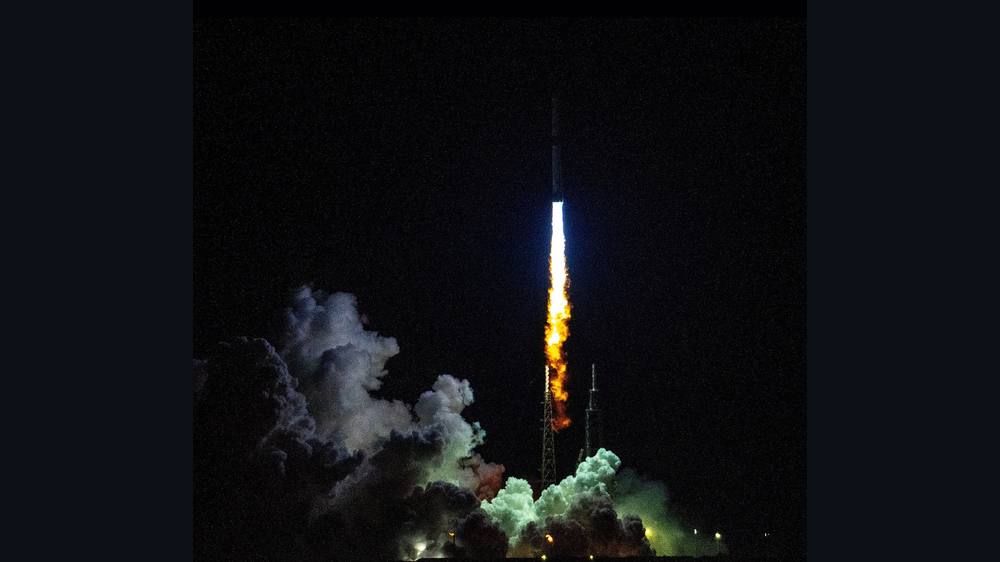

Its record so far shows real progress and real setbacks. In January 2025, New Glenn reached orbit on its first flight, but the booster was lost on its way down when its engines failed to restart. In November 2025, on its second flight, it launched NASA's twin ESCAPADE spacecraft toward Mars, and its booster landed on Jacklyn for the first time, making Blue Origin the second company to land an orbital-class booster.
On April 19, 2026, the third flight reused that same booster, the first New Glenn reuse, and landed it again. But the second stage failed to reach its intended orbit. The payload, a BlueBird satellite for AST SpaceMobile, was left in an orbit too low to operate and was lost, according to Spaceflight Now and Orlando's Spectrum News 13. The Federal Aviation Administration oversaw the investigation, and on May 22 it closed it, accepting Blue Origin's finding that a cryogenic leak froze a hydraulic line and caused a loss of thrust. Blue Origin identified nine corrective actions, which the agency will verify before the next New Glenn flight, according to SpaceNews.
Then, on May 28, 2026, a New Glenn exploded during a static-fire test at Launch Complex 36 at Cape Canaveral. The blast destroyed the rocket and its fueled upper stage, and it severely damaged Blue Origin's only operational New Glenn launch site, though no one was hurt. Blue Origin's CEO, Dave Limp, said on August 5 that the problem began at the main oxidizer valve of one of the seven BE-4 engines, a finding he said was confirmed by recovered hardware and inspections. We have seen the explosion labeled as the fourth New Glenn launch in some summaries, but it was a ground test, not a flight.
Limp said in June that the pad fared better than feared and could be repaired, and that Blue Origin expected to fly again before the end of 2026. Not everyone agrees. Ars Technica called the end-of-2026 timeline "very aggressive," and industry sources it cited said repairs to the pad, or completion of an alternative site, could take more than a year. Blue Origin is adding a second pad at the Cape and plans a West Coast pad at Vandenberg. The engine problem also has wider effects. Blue Origin is modifying BE-4 engines after the oxygen valve issue, including engines already delivered to United Launch Alliance.
The explosion ripples into other plans as well. Reuters reported that Amazon's planned launch of its Leo satellites on New Glenn was put at risk. NASA Administrator Jared Isaacman said NASA would like to move the first Blue Moon cargo lander, and potentially the crewed lander, to a different rocket, and that NASA was "de-coupling the lander from the launch vehicle and the pad itself," according to Spaceflight Now. He also said the agency would assess any effect on its Artemis plans.
Blue Origin's lunar lander program competes directly with Starship's role in NASA's Artemis program. The uncrewed Blue Moon Mark 1, named Endurance, completed thermal-vacuum testing in NASA's chamber at Johnson Space Center in Houston in 2026, and its first mission is listed as no earlier than early 2027. The larger crewed Mark 2 is designed to take two astronauts to the lunar surface. It was long tied to Artemis V, but in NASA's October 23 update neither Blue Origin nor SpaceX is assigned to a specific landing mission, and NASA will choose based on readiness. Some reference pages, including Grokipedia's, still tie Mark 2 to Artemis V and a later date, so schedules here are moving.
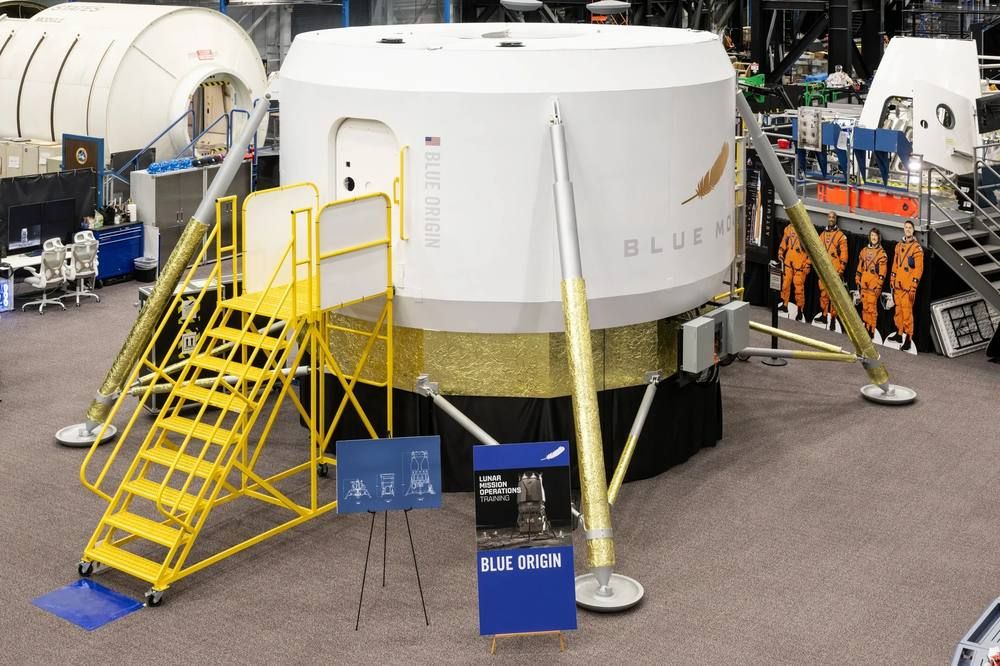

Does Blue Origin push the technology forward? Yes. It is the second company to land and refly an orbital booster, and its methane engines power two different rockets. Its lander gives NASA a second path to the lunar surface. But its slow flight rate and this year's setbacks show how hard it is to match SpaceX's operating tempo.
§ 3United Launch Alliance: the traditional provider
United Launch Alliance, a joint venture of Boeing and Lockheed Martin, has launched U.S. military and NASA missions for two decades. Its new rocket is Vulcan Centaur.
Vulcan's first stage uses two Blue Origin BE-4 engines. Its upper stage, Centaur V, uses two RL10C engines burning hydrogen. Up to six solid rocket boosters can be strapped on for extra thrust, and ULA lists about 27 tons to low Earth orbit with all six. Unlike Falcon 9 and New Glenn, Vulcan is expendable. ULA has a plan called SMART to detach the engine section after launch and recover it from the ocean using an inflatable heat shield and parachutes, since the engines are the most expensive part of the stage. ULA's LOFTID flight tested the inflatable heat shield itself. That plan has not been implemented, and no test date has been announced.
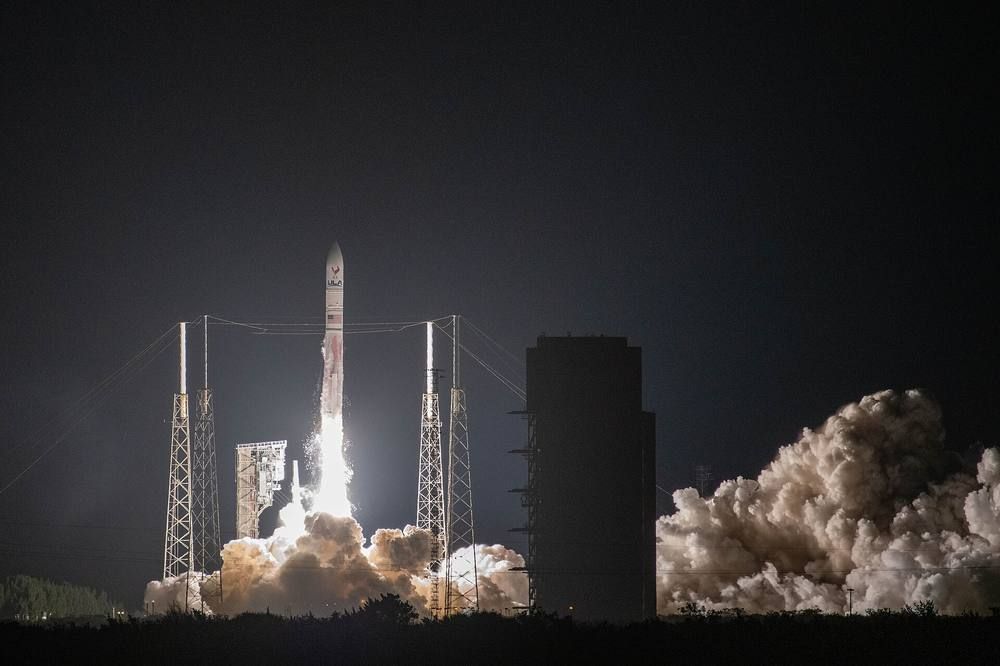

The Space Force certified Vulcan for national security missions in March 2025, after a solid booster nozzle came off during the rocket's second flight in October 2024. The Space Force was not pleased with the development. Major General Stephen Purdy told the House Armed Services Committee in May 2025 that the program had performed "unsatisfactorily" the previous year and that ULA needed to "repair trust."
Then on February 12, 2026, during the USSF-87 launch, one of Vulcan's solid boosters suffered a nozzle problem about 20 seconds after liftoff. The rocket still reached orbit, but it was the second solid-booster problem on Vulcan, and ULA paused flights. Booster maker Northrop Grumman took a $71 million charge related to the issue. A successful test firing of the booster followed in May, but the investigation continues.
The grounding has had consequences. On October 21, 2026, the U.S. Space Force confirmed it had reassigned six national security launches from ULA to SpaceX. SatNews described the move as part of an exchange of missions, in which ULA is expected to take over later missions that had been assigned to SpaceX. Even so, with Vulcan unavailable, the Pentagon has been left relying largely on one provider, SpaceX, for its most important launches. ULA aims to fly Vulcan again before the end of the year.
Vulcan also matters for NASA. On September 28, Administrator Isaacman said, "I do not think it's a secret that SpaceX intends to sunset older platforms like Falcon and Dragon as they concentrate on their next generation capability, Starship." Ars Technica reported that SpaceX has agreed to support the International Space Station until 2030 and then intends to retire Dragon. The same day, NASA announced that it would pay for Starliner upgrades and for certification of Vulcan Centaur for crewed missions, about $359 million in all, according to CNN. That would let Boeing's Starliner capsule fly on Vulcan after the Atlas V rockets it has used are retired. In other words, NASA is paying to have a second way to launch people, which is a direct response to its dependence on a single supplier.
Amazon is a major customer as well. ULA holds Amazon launch contracts, but the company also buys rides from Arianespace, Blue Origin, and SpaceX, according to Amazon's mission updates, so ULA is one of several Amazon providers rather than the main one.
Does ULA push the technology forward? Less than its rivals. Vulcan is a capable, conventional rocket, and the government values having more than one supplier. But it is expendable, it depends on another company's engines, and its reuse plan exists only on paper.
§ 4Rocket Lab: a smaller company with a carbon-fiber rocket
Rocket Lab is the second-busiest U.S. launch company after SpaceX, thanks to its small Electron rocket. It is also growing in other directions, including a planned purchase of the satellite company Iridium at an enterprise value of about $8 billion, with closing expected in mid-2027, subject to approvals.
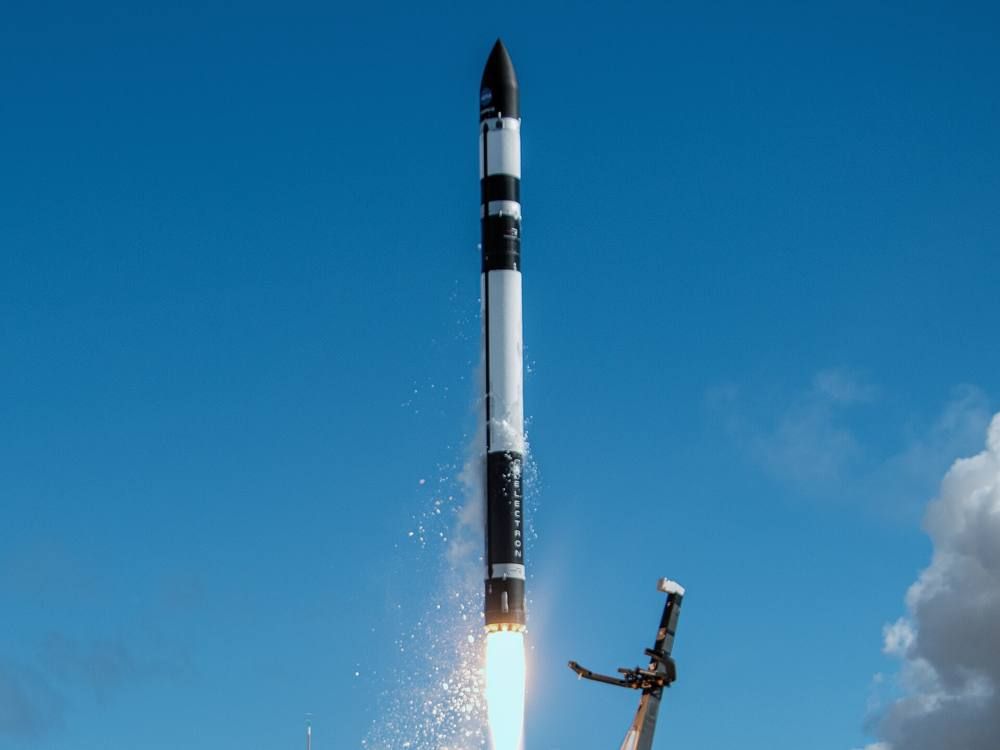

Its answer to Falcon 9 is Neutron, a medium-lift rocket that Rocket Lab says is designed to carry up to 13,000 kilograms to low Earth orbit, with a reusable first stage that lands on a platform at sea or at the launch site. Neutron takes a different approach from SpaceX. Much of its structure is made of carbon-fiber composite rather than metal, and its first stage uses nine Archimedes engines that burn methane and liquid oxygen.
Neutron has struggled to reach the launch pad. A propellant tank ruptured during testing in January 2026, which pushed the first flight from early to late 2026. Then, on October 14, Rocket Lab pushed the debut to 2027 after finding voids in a carbon-composite dome on the first stage. The company is rebuilding and inspecting the dome and targets first-stage testing in the first quarter of 2027, after which it will set a launch date. Reuters reported that the company's shares fell on the news.
Does Rocket Lab push the technology forward? Potentially. Neutron's composite design is a real alternative to SpaceX's metal rockets, and Electron's record is strong. But composite tanks have proven difficult, and Neutron has not flown.
§ 5Europe: flying Ariane 6 while working on reuse
Europe's main rocket is Ariane 6, operated by Arianespace and built by ArianeGroup. It has been flying since 2024 and is expendable. Arianespace was aiming for six to eight Ariane 6 launches in 2026, according to European Spaceflight, and the program's stated cost goal, set in 2014, is a 40 percent cut in cost per kilogram compared with Ariane 5. An ESA official told SpaceNews that the agency was working to achieve it. We have not found independent confirmation that the goal has been met. Grokipedia gives a figure of roughly 50 percent for the target, a difference we resolve in favor of the ESA official's statement. The program has also drawn criticism for development costs and for the lack of reuse.
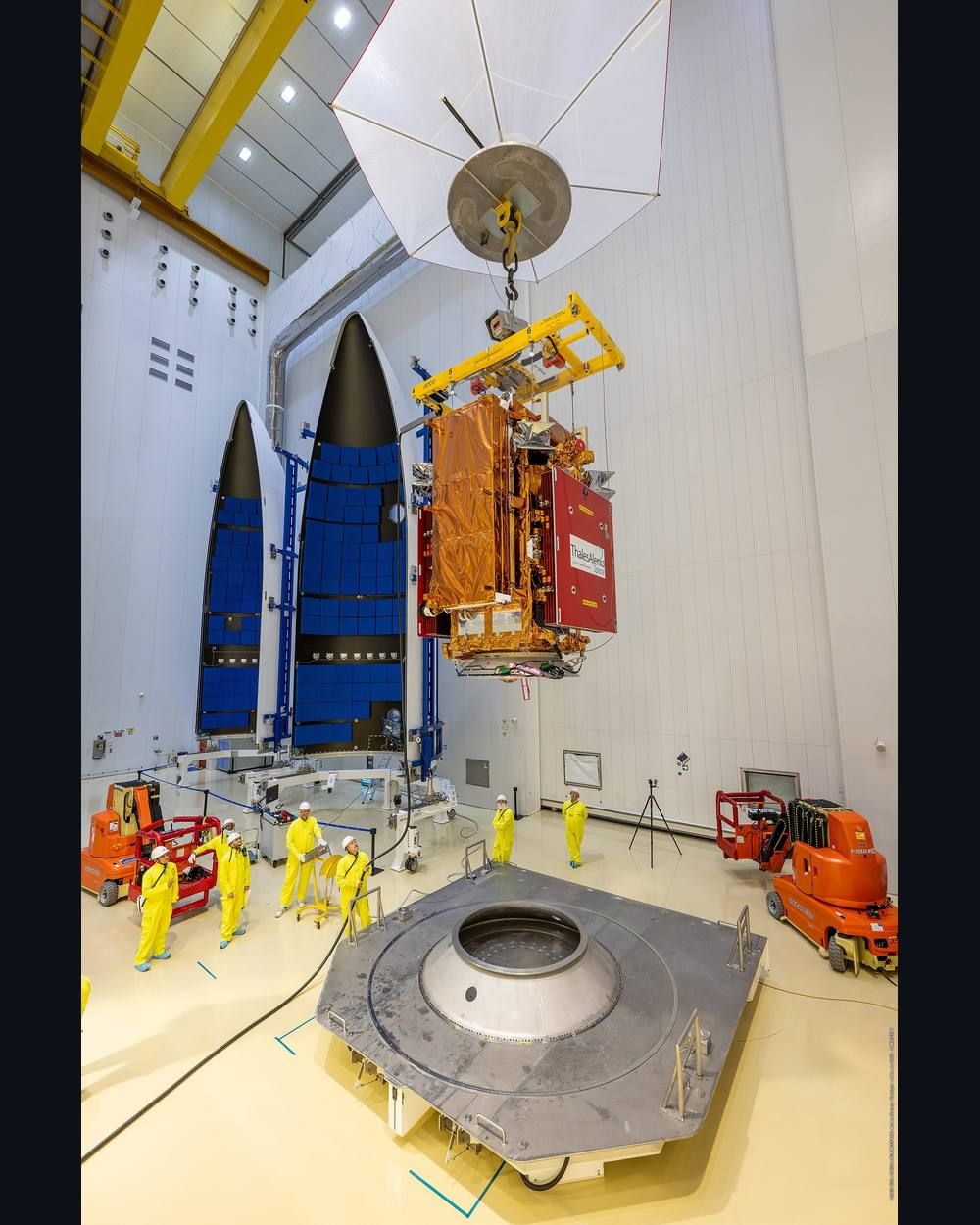

In 2026, Ariane 6 has become a key launcher for Amazon. Its four-booster version, Ariane 64, launched 32 Amazon Leo satellites in February, another 32 in April, and 36 in June, the first flight with upgraded P160C boosters. The next mission, scheduled no earlier than November 23, will carry another 36 Amazon satellites on Ariane 6's tenth flight. In September, Amazon added six more Ariane 64 launches, bringing the contract to 24 missions, according to Amazon.
Europe knows it is behind on reuse and is working on several fronts. Themis, a reusable booster demonstrator built by ArianeGroup for the European Space Agency, is preparing for its first short hop test, with reported target dates that have shifted during 2026. Prometheus, a low-cost methane engine that ESA says will be restartable and about ten times cheaper than the hydrogen Vulcain engine, has been hot-fire tested since 2023. Ariane Next, a partially reusable successor, is aimed at the 2030s, with a stated goal of cutting costs in half compared with Ariane 6. That goal and the timing come from ArianeGroup's roadmap as summarized in an industry paper, and we could not confirm them from an ESA page. In January 2026, ArianeGroup also proposed an Ariane 6 upgrade that would use reusable boosters derived from the rocket of MaiaSpace, a European startup, although the agency shelved a separate proposed Ariane 6 upgrade, Block 3, earlier this year, saying it saw "no programme need or justification" for it.
Europe also has a new commercial player. On September 5, 2026, the German company Isar Aerospace put satellites into orbit on the second flight of its Spectrum rocket. Space.com called it the first orbital launch from Western European soil. Spectrum is small, designed to carry up to about 1,000 kilograms, so it competes in a different class than Falcon 9.
Does Europe push the technology forward? Mostly by catching up. Ariane 6 gives Europe independent access to space, and the Amazon contract keeps it busy. But Europe's reusable rockets are still in the demonstrator stage, years behind SpaceX, Blue Origin, and China.
§ 6China: the fastest-moving challenger
China is SpaceX's most serious long-term competitor, with both state-owned and commercial rocket programs advancing quickly.
In 2026, China became the second country, after the United States, to recover an orbital rocket booster. On July 10, a state-built Long March 10B made its first flight, reached orbit, and had its first stage recovered, with the booster caught by a net aboard a ship at sea. That is a different method from both Falcon 9's legs and Starship's tower arms.
Weeks later, on August 18, the private company LandSpace landed the first stage of its Zhuque-3 rocket on its second flight. Zhuque-3 resembles SpaceX's designs. It is a 66-meter rocket built of stainless steel, the material SpaceX chose for Starship, and it is powered by nine methane-fueled engines, like Falcon 9's nine-engine layout, according to China Daily, citing LandSpace's technical specifications. Its first flight, in December 2025, reached orbit but its booster crashed. On the second flight, the booster landed about 390 kilometers downrange. NASASpaceflight reported that it later toppled after a fire broke out at its base. LandSpace says its boosters are designed for at least 20 flights, and it is developing an upgraded, longer Zhuque-3E. A single recovery does not make a reusable rocket program, but it shows the gap is narrowing.
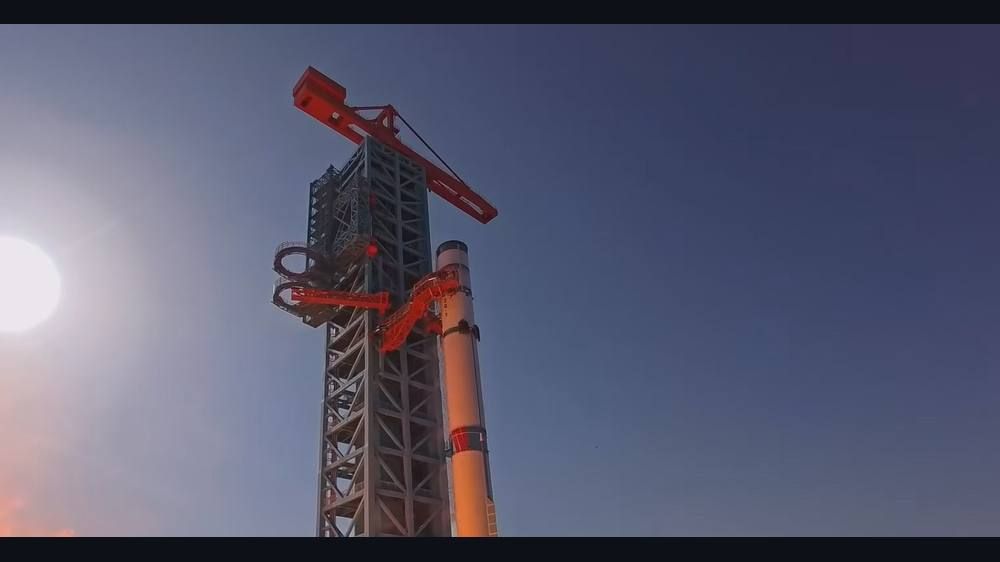

Beyond the commercial rockets, China's state rocket builder is developing the Long March 10, a human-rated heavy rocket to launch the Mengzhou crew spacecraft and the Lanyue lunar lander. China's stated goal is to land astronauts on the Moon by 2030. On February 11, 2026, China carried out a flight test in which a Long March 10 test stage carried a Mengzhou capsule through a maximum-pressure launch-escape test, and the stage came down in a controlled splashdown, according to Xinhua and CGTN. The first orbital flight of the Long March 10A with Mengzhou was officially planned for 2026. But China's human spaceflight agency left it out of its second-half outlook in July, and the newsletter China in Space reported that it may slip to early 2027. No new date has been announced.
China's answer to Starship is the Long March 9. In late 2024, its designers dropped plans for an expendable super-heavy rocket in favor of one with a reusable first stage. Reports describe a rocket about 108 meters tall and 10 meters wide that can lift 150 tons to low Earth orbit, with a test flight around 2030, though one report puts it closer to 2033. China's stated long-term goal is a fully reusable, Starship-like version in the 2040s. These figures come from reporting on Chinese plans rather than from detailed official specifications, so they may change.
Does China push the technology forward? Yes, and quickly. China has demonstrated two different booster recovery methods in one year and has a crewed lunar landing target that is only a couple of years behind NASA's current plan. Much of its approach follows SpaceX's lead, from stainless steel to methane engines, which shows how quickly proven ideas spread. Its net-catch method shows it is also willing to try its own solutions.
§ 7Japan, India, and Russia
Japan's H3 returned to flight on June 12, 2026, after a December 2025 failure that destroyed a navigation satellite. The return-to-flight mission debuted a lighter three-engine version, with no solid boosters, and delivered all six of its small satellites, according to JAXA and Space.com. H3 is expendable and focused on Japan's government needs.
India had a setback early in 2026 when its workhorse PSLV rocket failed on the PSLV-C62 mission on January 12. The Hindu reported that anomalies near the end of the third stage caused roll disturbances and a trajectory deviation. India's planned Next Generation Launch Vehicle, nicknamed Soorya, is designed to be partially reusable. India's cabinet approved it in September 2024, and India Today reported in March that its first development flight is now targeted for September 2031.
Russia flew its new Soyuz-5 rocket from Baikonur in Kazakhstan on April 30, 2026, on a test flight that its space agency called successful, according to Reuters; it carried a dummy payload on a suborbital trajectory, according to RussianSpaceWeb. Its planned reusable methane rocket, Amur, has slipped, with a prototype launch and landing now targeted for 2028, according to RussianSpaceWeb.
None of the three is currently a direct threat to Falcon 9 or Starship, but each gives its country independent access to space.
§ 8America's newcomers
Several newer U.S. companies are building rockets aimed at Falcon 9's market. Relativity Space plans to launch its Terran R, a reusable medium-to-heavy rocket, from Launch Complex 16 at Cape Canaveral. Relativity's website says launches will start in late 2026, but its September update gave no date. By then all 13 first-stage engines were installed on the thrust structure and integrated testing, including gimbal tests, had begun. Stoke Space is developing Nova, a rocket designed to be fully reusable, including its upper stage; the first version, Nova Pathfinder, is listed at about 3 metric tons to low Earth orbit in reusable mode. On September 8, the company announced a $1 billion funding round and said it is targeting early 2027 for the first orbital launch of a Nova Pathfinder.
§ 9What it means for SpaceX
For now, SpaceX's lead is wide. Its two biggest U.S. heavy-lift rivals, New Glenn and Vulcan, are both grounded. Neutron has slipped to 2027. Europe's reusable rockets are demonstrators. China's Starship-class rocket is years away. The company's own story, mission and business are in my standalone SpaceX overview.
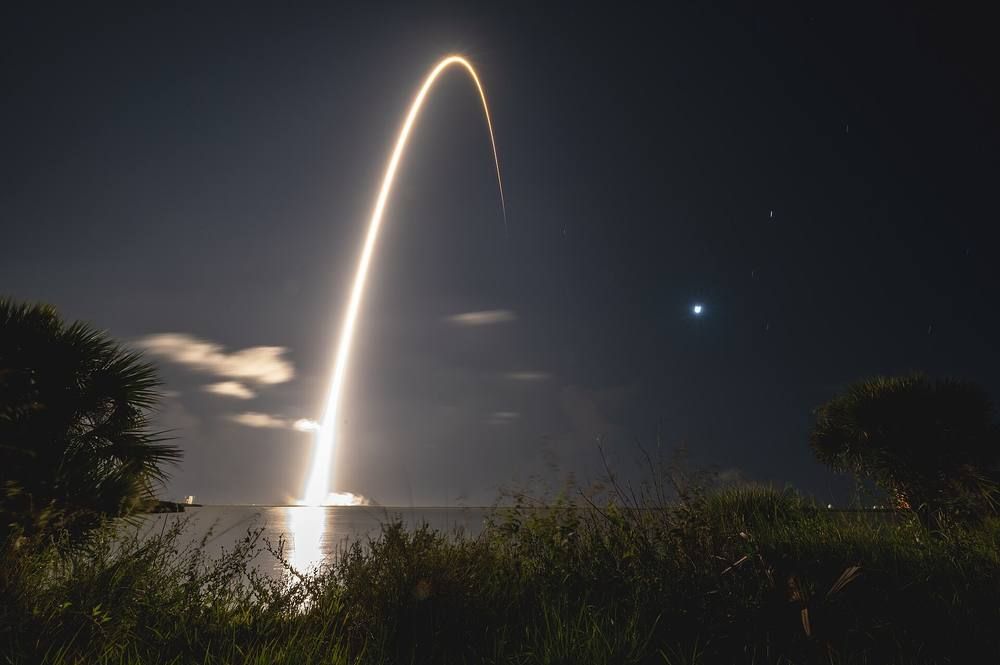

Reuters reported in August that rivals have struggled to match SpaceX's reusability advantage and launch rate, and that SpaceX's own Starlink network now accounts for about 79 percent of Falcon 9 launches. That gives SpaceX a steady internal source of launches that no competitor has. The same report said at least seven spacecraft companies told Reuters that Falcon 9 is booked through 2028 or 2029, which limits rivals' access to orbit when they are customers of SpaceX as well as competitors.
That lead creates its own risk. When Vulcan was grounded, the Pentagon was left relying on a single provider for its most important launches. Governments generally want at least two options, which gives them strong reasons to keep funding SpaceX's competitors even when those competitors are behind. NASA's Vulcan human-rating decision is one example.
There are also signs that competition is starting to bite in specific areas. Amazon is building a Starlink rival, and it is buying launches from Arianespace, ULA, Blue Origin, and SpaceX. Blue Origin's Blue Moon gives NASA an alternative to Starship on the Moon. And China's progress gives Washington a political reason to keep pushing its own programs hard.
§ 10The Moon race
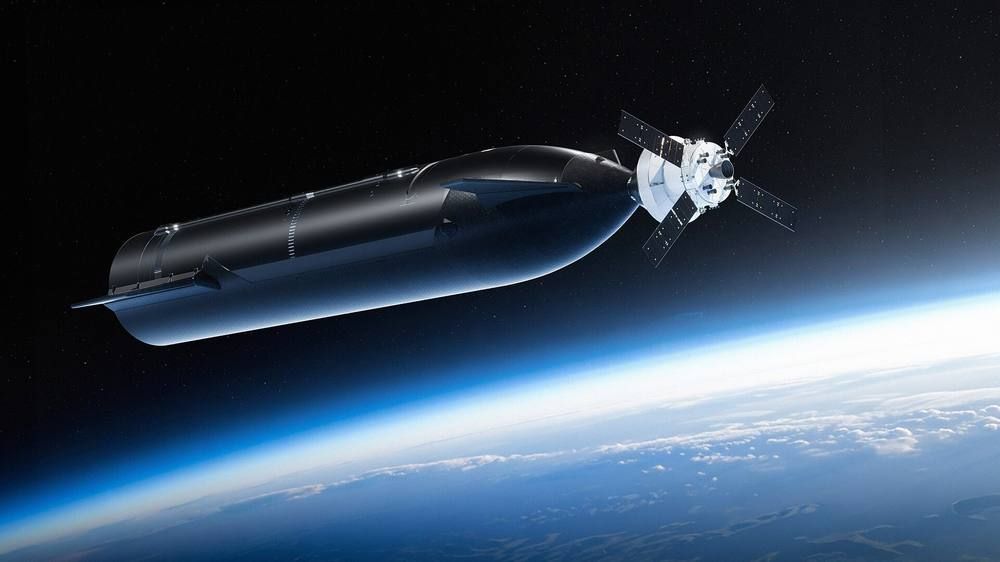
NASA's lunar plan changed this year. Artemis II launched on April 1, flew a crew around the Moon, and splashed down on April 10. Artemis III, now planned for 2027, has been redesigned as a test in low Earth orbit rather than a landing. In it, the Orion capsule is meant to dock with test versions of Blue Origin's and SpaceX's landers. Artemis IV, planned for 2028, is the first mission intended to land astronauts. NASA has said it will use whichever lander is ready, and on October 23 it described a new Blue Moon plan, using three transfer stages, to meet the 2028 date. Which company gets there first has not been decided. China's target is 2030. For the first time in more than half a century, two nations are actively racing to put people on the Moon, and the rockets in this article will decide who gets there first. Because the schedules depend on New Glenn being repaired and on Starship proving orbital refueling, both of which are unfinished, dates in this section may move.

§ 11What it means for everyone else
The competition matters beyond the companies involved. First, the technology is converging. Almost every serious new rocket now uses methane-fueled engines, including SpaceX's Raptor, Blue Origin's BE-4, LandSpace's Tianque-12, Rocket Lab's Archimedes, and Europe's Prometheus. Almost every serious new design plans to recover its first stage, whether on legs, by a net at sea, or with tower arms. A decade ago, reusable orbital rockets were an experiment. Today they are the expected standard.
Second, costs are likely to keep falling. More reusable rockets competing for the same customers should keep pushing launch prices down. That makes it cheaper to build satellite networks and to send science missions such as NASA's ESCAPADE probes, which flew on New Glenn.
Third, redundancy matters. When one rocket is grounded, missions can move to another. The more capable rockets exist, the less the world's access to space depends on any single company or country. This is the point the grounding of New Glenn and Vulcan makes clearly, and it cuts both ways. It shows why SpaceX's customers value its reliability, and why governments worry about relying on it.
Fourth, not all competition pushes the frontier. Some rivals are copying proven ideas rather than inventing new ones, and some, like Vulcan, Ariane 6, and H3, remain expendable. Copying still has value, because it spreads capability and lowers costs. But the genuinely new ideas, such as tower catches, full reuse, and refueling in orbit, are still coming mainly from SpaceX, with others following.
§ 12What to watch
New Glenn's return to flight, promised before the end of 2026, will show whether Blue Origin's timeline holds and whether its booster can land and refly consistently. Vulcan's return to flight will show whether the Space Force moves missions back to ULA. Neutron's debut in 2027 will test whether its carbon-composite design works.
In Europe, the Themis hop test will be the first real step toward a European reusable rocket. In China, watch for the next booster landings and the first orbital flight of the Long March 10A with Mengzhou. And at SpaceX, watch Flight 15 of Starship, which is expected to attempt to catch both stages, though the Federal Aviation Administration has not yet issued its license and no firm date is set. If it works, the bar for everyone else moves again.
§ 13The bottom line
SpaceX's competitors are real, well funded, and making progress. Blue Origin has landed and reflown a booster. China has recovered boosters two different ways in a single year. Europe has a working heavy rocket and a growing commercial sector. But in late 2026, none of them launches as often, reuses as much, or costs as little as SpaceX.
The competition is still doing something important. It is spreading reusable rocket technology around the world, giving governments alternatives, and putting pressure on prices. Whether any rival can catch SpaceX depends on how fast they move, and on how fast SpaceX keeps moving ahead. For now, the lead is wide, but this autumn's groundings show how thin the field of alternatives can be.
Watch & Listen
Hear this entry read aloud. Coming soon — the channels are not live yet.
Sources
Blue Origin
- SpaceNews – Blue Origin announces New Glenn upgrade plans (9 by 4)
- SpaceNews – Blue Origin completes investigation into New Glenn launch failure
- Spectrum News 13 – New Glenn fails to send satellite into correct orbit
- Spaceflight Now – New Glenn explodes during prelaunch testing
- Ars Technica – Blue Origin has set a very aggressive return-to-flight timeline
- Reuters – Blue Origin faces months of delays after rocket explosion damages launch pad (May 30, 2026)
- Spaceflight Now – NASA head urges new launcher for Blue Origin's moon landers
- Axios – Blue Origin factsheet (founding in 2000)
- Gunter's Space Page – New Glenn
- Blue Origin – New Glenn launches ESCAPADE, lands booster
- Space.com – New Glenn lands booster for first time
- NASASpaceflight – NG-3 reuses booster
- Spaceflight Now – NG-3 payload in wrong orbit
- TechCrunch – New Glenn to fly again this year after explosion
- Spaceflight Now – Blue Origin vows to resume flights by year's end
- Space.com – Blue Origin adding second pad
- NASA – Blue Origin Moon lander completes vacuum chamber testing
United Launch Alliance
- ULA – Vulcan Centaur (configurations, performance, engines)
- ULA – LOFTID inflatable heat shield (SMART reuse concept)
- CNN via KQ2 – NASA reveals new plan for Starliner, Vulcan certification (Sept. 28, 2026)
- Ars Technica – NASA has a Dragon dilemma (Sept. 29, 2026)
- Orbital Radar – Vulcan Centaur profile
- Spaceflight Now – Vulcan solid booster problem on USSF-87
- Spaceflight Now – ULA confirms successful booster test
- SatNews – Space Force reassigns six launches to SpaceX
- KeepTrack – Vulcan grounded, Pentagon down to one rocket
- KeepTrack – Northrop Grumman $71M charge
- WFTV – ULA aims for late 2026 return; BE-4 modifications
- The Space Review – ULA 2025 launch activity
Rocket Lab
- Rocket Lab – Neutron
- Rocket Lab – Neutron payload user's guide
- Rocket Lab – Rocket Lab to acquire Iridium
- Rocket Lab – Q3 2026 SEC filing (Neutron update)
- Via Satellite – Neutron debut delayed to 2027
- The Motley Fool – Rocket Lab postpones Neutron again
- NASASpaceflight – Rocket Lab prepares for Neutron debut
Europe
- European Spaceflight – Arianespace aiming for as many as eight Ariane 6 launches in 2026
- SpaceNews – Europe aims to end space access crisis with Ariane 6's inaugural launch (40% cost goal)
- ESA – Themis
- ESA – Prometheus
- Amazon – Amazon Leo adds 6 new Arianespace launches
- Arianespace – 32 Amazon Leo satellites on first Ariane 64
- European Spaceflight – another 32 Amazon Leo satellites
- Arianespace – VA269 36 satellites, advanced boosters
- Arianespace – 10th Ariane 6 flight Nov 23
- SatNews – Themis hop test target
- European Spaceflight – Ariane 6 evolution with MaiaSpace boosters
- Space.com – Isar Aerospace reaches orbit
China
- China Daily – LandSpace's Zhuque-3 first launch, with specifications (Dec. 3, 2025)
- Xinhua – China's Long March-10 passes key tests (Feb. 13, 2026)
- China in Space – First Mengzhou mission may be delayed to 2027 (July 18, 2026)
- Interesting Engineering – China lands booster on legs after net catch
- NASASpaceflight – Zhuque-3 second flight successful landing
- NASASpaceflight – Zhuque-3 topples after landing
- SpaceNews – LandSpace recovers booster
- Spaceflight Now – first commercial Chinese company to land an orbital booster
- CGTN – Long March 10 low-altitude flight test
- SatNews – China advances 2030 lunar timeline
- SAN – Long March 9 aims to rival Starship
- SpaceNews – Long March 9 redesign
- Universe Magazine – new Long March 9 design
- Yahoo – China's big strides in space in 2025
Japan, India and Russia
- India Today – ISRO mission timeline, including NGLV (March 29, 2026)
- RussianSpaceWeb – Soyuz-5 flies its first test mission
- PIB (Government of India) – Cabinet approval for the Next Generation Launch Vehicle
- AP – Japan's H3 returns to flight after December failure
- The Hindu – What happened to ISRO's PSLV-C62 mission
- Reuters – Russia test launches Soyuz-5 from Kazakhstan
- NASASpaceflight – H3 return to flight
- Space.com – H3 bounces back
- RussianSpaceWeb – Amur
U.S. newcomers and Amazon
- Stoke Space – Nova Pathfinder
- Stoke Space – Stoke Space raises $1 billion
- Relativity Space – September 2026 company update
- Relativity Space – Terran R
- NASASpaceflight – Terran R engine integration
- NASASpaceflight – Stoke and Relativity Cape launch sites
- Amazon – Amazon Leo mission updates
Implications and launch share
- Reuters – SpaceX's satellite ambitions squeeze out rivals reliant on its rockets (Aug. 4, 2026)
- Flight Atlas – SpaceX launch tracker
- KeepTrack – Pentagon down to one rocket
- Space.com – Artemis 3 timing
- The Conversation – New Glenn sea landing broadens commercial market
Moon race and NASA
- NASA – NASA, partners accelerate lander development for 2028 Moon missions (Oct. 23, 2026)
- NASA – Liftoff: NASA launches astronauts on Artemis II
- NASA – Artemis III mission to test future Moon lander operations
- NASA – NASA adds mission to Artemis lunar program, updates architecture
Additional
- SpaceX – Capabilities & Services (Falcon 9 price)
- Space.com – Starship Flight 14 reaches orbit
- NASASpaceflight – Starship Flight 14 reaches orbit; Flight 15 preview
Videos (views checked October 27, 2026)
- Blue Origin, "Replay: New Glenn Mission NG-1 Webcast," 556,186 views
- Scott Manley, "Blue Origin Get To Orbit On First Try With Their Massive New Glenn Rocket," 433,075 views
- Scott Manley, "New Glenn's First Failure - What Do We Know?," 524,953 views
- European Space Agency, "Ariane 6 first flight (Official broadcast)," 444,158 views
- United Launch Alliance, "Jan. 8 LIVE Broadcast: Vulcan Cert-1," 239,994 views
- Rocket Lab, "This is Neutron," 283,344 views
Also see (Wikipedia and Grokipedia; secondary sources, cross-checked against the primary and credible sources above and never the only support for a claim)
- Wikipedia – New Glenn: en.wikipedia.org/wiki/New_Glenn · Grokipedia: grokipedia.com/page/New_Glenn
- Wikipedia – Blue Origin: en.wikipedia.org/wiki/Blue_Origin · Grokipedia: grokipedia.com/page/Blue_Origin
- Wikipedia – Blue Moon (spacecraft): en.wikipedia.org/wiki/Blue_Moon_(spacecraft) · Grokipedia: grokipedia.com/page/Blue_Moon_(spacecraft)
- Wikipedia – Vulcan Centaur: en.wikipedia.org/wiki/Vulcan_Centaur · Grokipedia: grokipedia.com/page/Vulcan_Centaur
- Wikipedia – Rocket Lab Neutron: en.wikipedia.org/wiki/Rocket_Lab_Neutron · Grokipedia: grokipedia.com/page/Rocket_Lab_Neutron
- Wikipedia – Themis programme: en.wikipedia.org/wiki/Themis_programme · Grokipedia: grokipedia.com/page/Themis_programme
- Wikipedia – Prometheus (rocket engine): en.wikipedia.org/wiki/Prometheus_(rocket_engine) · Grokipedia: grokipedia.com/page/Prometheus_(rocket_engine)
- Wikipedia – Ariane Next: en.wikipedia.org/wiki/Ariane_Next · Grokipedia: grokipedia.com/page/Ariane_Next
- Wikipedia – Isar Aerospace: en.wikipedia.org/wiki/Isar_Aerospace · Grokipedia: grokipedia.com/page/Isar_Aerospace
- Wikipedia – Zhuque-3: en.wikipedia.org/wiki/Zhuque-3 · Grokipedia: grokipedia.com/page/Zhuque-3
- Wikipedia – Long March 10: en.wikipedia.org/wiki/Long_March_10 · Grokipedia: grokipedia.com/page/Long_March_10
- Wikipedia – Mengzhou (spacecraft): en.wikipedia.org/wiki/Mengzhou_(spacecraft) · Grokipedia: grokipedia.com/page/Mengzhou_(spacecraft)
- Wikipedia – H3 (rocket): en.wikipedia.org/wiki/H3_(rocket) · Grokipedia: grokipedia.com/page/H3_(rocket)
- Wikipedia – PSLV-C62: en.wikipedia.org/wiki/PSLV-C62 · Grokipedia: grokipedia.com/page/PSLV-C62
- Wikipedia – Next Generation Launch Vehicle: en.wikipedia.org/wiki/Next_Generation_Launch_Vehicle · Grokipedia: grokipedia.com/page/Next_Generation_Launch_Vehicle
- Wikipedia – Soyuz-5 (rocket): en.wikipedia.org/wiki/Soyuz-5_(rocket) · Grokipedia: grokipedia.com/page/Soyuz-5_(rocket)
- Wikipedia – Terran R: en.wikipedia.org/wiki/Terran_R · Grokipedia: grokipedia.com/page/Terran_R
- Wikipedia – Artemis program: en.wikipedia.org/wiki/Artemis_program · Grokipedia: grokipedia.com/page/Artemis_program
- Wikipedia – Artemis III: en.wikipedia.org/wiki/Artemis_III · Grokipedia: grokipedia.com/page/Artemis_III
- Wikipedia – Amazon Leo: en.wikipedia.org/wiki/Amazon_Leo · Grokipedia: grokipedia.com/page/Amazon_Leo
- Wikipedia – Ariane 6: en.wikipedia.org/wiki/Ariane_6 · Grokipedia: grokipedia.com/page/Ariane_6
- Wikipedia – Stoke Space: en.wikipedia.org/wiki/Stoke_Space · Grokipedia: grokipedia.com/page/Stoke_Space
- Wikipedia – List of New Glenn launches
- Wikipedia – 2026 New Glenn rocket explosion
- Wikipedia – Jacklyn (LPV1)
- Wikipedia – Blue Moon Pathfinder Mission 1
- Wikipedia – Stoke Space Nova